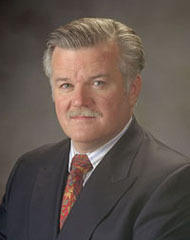
Crucible of Command: Ulysses S. Grant a... A source page for quotes linked to William C. Davis. 0 quotes
Battle at Bull Run: A History of the Fi... A source page for quotes linked to William C. Davis. 0 quotes
Look Away!: A History of the Confederat... A source page for quotes linked to William C. Davis. 0 quotes
“The mythology serves purposes darker than sentiment, nothing more so than the currently popular, and arrantly nonsensical, assertion that Lee freed his inherited slaves in 1862 before the war was over, while Grant kept his until the Thirteenth Amendment freed them in 1865. The subtext is transparent. If Southerner Lee freed his slaves while Northerner Grant kept his, then secession and the war that followed can hardly have had anything to do with slavery and must instead have been over the tariff or state rights, or some other handy pretext invented to cloak slavery’s pivotal role.” SlaveryAmerican Civil WarConfederateSlavery In The United StatesRobert E LeeConfederate States Of AmericaAmerican Civil War Biography Book:Crucible of Command: Ulysses S. Grant and Robert E. Lee--The War They Fought, The Peace They Forged Source: Crucible of Command: Ulysses S. Grant and Robert E. Lee--The War They Fought, The Peace They Forged
“Worse, Lee felt isolated. In Texas he skipped meals with others to avoid “uninteresting men,” wishing he was back by his campfire on the plains eating his meals alone.211 He avoided sharing quarters and found that he “would infinitely prefer my tent to my-self.”212 In a group he felt more alone than out on the prairie, and that “my pleasure is derived from my own thoughts.” American Civil WarRobert E LeeConfederate ArmyUnion ArmyAmerican Civil War Biography Book:Crucible of Command: Ulysses S. Grant and Robert E. Lee--The War They Fought, The Peace They Forged Source: Crucible of Command: Ulysses S. Grant and Robert E. Lee--The War They Fought, The Peace They Forged
“Both men lost speech in their last days and hours. Both died at age sixty-three, Lee long since weary of life, and Grant ready to live it again. Their war made them national icons, and their war reputations dictated the balance of their lives, careers, and posterity.” American Civil WarRobert E LeeConfederate ArmyUnion ArmyAmerican Civil War Biography Book:Crucible of Command: Ulysses S. Grant and Robert E. Lee--The War They Fought, The Peace They Forged Source: Crucible of Command: Ulysses S. Grant and Robert E. Lee--The War They Fought, The Peace They Forged
“Notwithstanding our boastful assertions to the world, for nearly a century, that our government was based on the consent of the people, it rests upon force, as much as any government that ever existed. - Robert E. Lee” American Civil WarRobert E LeeConfederate ArmyUnion ArmyAmerican Civil War Biography Book:Crucible of Command: Ulysses S. Grant and Robert E. Lee--The War They Fought, The Peace They Forged Source: Crucible of Command: Ulysses S. Grant and Robert E. Lee--The War They Fought, The Peace They Forged
“Grant was forty-two and Lee fifty-seven, Grant at the peak of health and energy, while Lee feared his weakening body and lagging faculties. Each was defending his notion of home. Grant by now was the most popular man in the Union, arguably more so even than Lincoln. Lee was easily the most important man in the Confederacy, his popularity and influence, had he chosen to use it, far outstripping Davis’s. Unquestionably, they were at this moment the preeminent military figures in America, and arguably the world.” American Civil WarRobert E LeeConfederate ArmyUnion ArmyConfederate States Of AmericaAmerican Civil War Biography Book:Crucible of Command: Ulysses S. Grant and Robert E. Lee--The War They Fought, The Peace They Forged Source: Crucible of Command: Ulysses S. Grant and Robert E. Lee--The War They Fought, The Peace They Forged
“by spring 1862 it became universal throughout Confederate regiments for the soldiers to elect their leaders from colonel down to sergeants, the very imposition of military democracy that would lead some to bemoan the demagoguery and wire-pulling with the men in order to seek election.” American Civil WarConfederate ArmyConfederate States Of America Book:Look Away!: A History of the Confederate States of America Source: Look Away!: A History of the Confederate States of America
“The whole scene so reeked of penny romance that it bordered on the ludicrous . . . It was all really happening, but more like fiction come to life, a Waverly novel gone mad. Years later, Mark Twain would only half in jest propose that the American Civil War was to be blamed on Sir Walter Scott, that the people of the South had somehow persuaded themselves that the mythical era of gallant knights and fair damsels of Ivanhoe had come to life in Dixie.” American Civil WarCivil War Eastern TheaterConfederate States Of America Book:Battle at Bull Run: A History of the First Major Campaign of the Civil War Source: Battle at Bull Run: A History of the First Major Campaign of the Civil War
“The Blood of Heroes is surely the best account to date, one that presents plenty of new insights while acting as a corrective-or at least an alternative viewpoint-to previous accounts....Donovan combines that vital blend of authoritative scholarship with the vivid writing necessary to make an oft-told tale seem fresh.” WritingSeemsActingBloodHeroAccountsInsightTalesPlentyAlternativesVividScholarshipViewpoints Author:William C. Davis