“It is a matter of perfect indifference where a thing originated; the only question is: Is it true in and for itself?”
Quote by Georg Wilhelm Friedrich Hegel
Work
The Philosophy of History
This book delves into the theoretical underpinnings and philosophical approaches to the study of history, examining various perspectives on the nature of historical inquiry and the interpretation of past events. more
Author
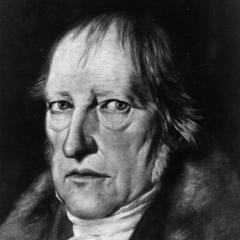
Georg Wilhelm Friedrich Hegel
German philosopher, one of the most important representatives of German classical philosophy. Hegel's philosophical system has had a profound impact on the world. Hegel believed that the task of philosophy is to reveal the absolute spirit, emphasizing the importance of reason, history, and dialectics. more
You May Also Like
“Anyone who attempts anything original in the world must expect a bit of ridicule.”
Source: The Rambler: A Periodical Paper, Published in 1750, 1751, 1752
Source: The Works of Samuel Johnson, LL.D.: With Murphy's Essay
Source: The Beauties of Johnson: Consisting of Maxims and Observations, Moral, Critical, and Miscellaneous
Source: Selected essays
Source: The Rambler: A Periodical Paper, Published in 1750, 1751, 1752
“Some people regard discipline as a chore. For me, it is a kind of order that sets me free to fly.”
“Real progress is progress in charity, all other advances being secondary thereto.”