Quotessence
Home / Quotes / Quote by Plato

Quote by Plato

“Now in this island of Atlantis there was a great and wonderful empire which had rule over the whole island and several others, and over parts of the continent and, furthermore, the men of Atlantis had subjected the parts of Libya within the columns of Heracles as far as Egypt, and of Europe as far as Tyrrhenia.This vast power, gathered into one, endeavored to subdue at a blow our country and yours and the whole of the region within the straits, and then, Solon, your country shone forth, in the excellence of her virtue and strength, among all mankind.”

Quote by Plato

Work

Gorgias and Timaeus

This book includes two significant works by the ancient Greek philosopher Plato. The 'Gorgias' explores the nature of rhetoric and its ethical implications, while the 'Timaeus' delves into the creation and structure of the universe, offering insights into the nature of reality and the soul. more

Author

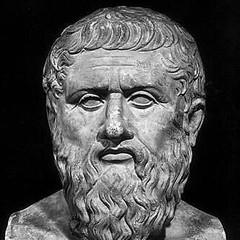
Plato
Plato

Plato (428 BC - 348 BC) was a prominent Greek philosopher, one of the most influential figures in Western philosophy. He founded the Academy, which was the first institution of higher education in the Western world. Plato's philosophy, centered around the theory of Forms, emphasized the importance of reason and morality. more

You May Also Like

“When I hear a man discoursing of virtue, or of any sort of wisdom, who is a true man and worthy of his theme, I am delighted beyond measure: and I compare the man and his words, and note the harmony and correspondence of them. And such an one I deem to be the true musician, having in himself a fairer harmony than that of the lyre.”

“No one punishes the evil-doer under the notion, or for the reason, that he has done wrong -- only the unreasonable fury of a beast acts in that way. But he who desires to inflict rational punishment does not retaliate for a past wrong, for that which is done cannot be undone, but he has regard to the future, and is desirous that the man who is punished, and he who sees him punished, may be deterred from doing wrong again.”