“The main object of the work was to present such a survey of the advances already made in physical knowledge, and of the mode in which they have been made, as might serve as a real and firm basis for our speculations concerning the progress of human knowledge, and the processes by which sciences are formed.”
Quote by William Whewell
Work
History of the Inductive Sciences: I. The Greek school philosophy, with reference to physical science. II. The physical sciences in ancient Greece. III. Greek astronomy. IV. Physical science in the middle ages. V. Formal astronomy after the stationary period
The book delves into the historical progression of inductive sciences, examining the philosophical underpinnings of physical science in ancient Greece, the advancements in physical sciences during that era, the contributions of Greek astronomy, and the subsequent developments in physical science throughout the Middle Ages. It also covers the evolution of formal astronomy following the stationary period. more
Author
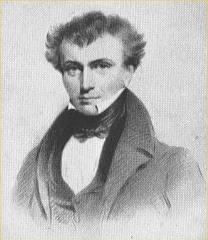
William Whewell
William Whewell was a polymath from England, born on May 24, 1794, and died on March 6, 1866. He made significant contributions to the fields of scientific philosophy, the history of science, logic, mathematics, and astronomy. more
You May Also Like
Source: History of the Inductive Sciences from the Earliest to the Present Time
Source: History of Inductive Sciences
Source: The uses of enchantment: the meaning and importance of fairy tales
Source: Synge: Complete Plays: In the Shadow of the Glen; Riders to the Sea; The Tinker's Wedding; The Well of the Saints; The Playboy of the Western World; Deirdre of the Sorrows
Source: Playboy of the Western World and Other Plays