“The truth is, the Science of Nature has been already too long made only a work of the Brain and the Fancy: It is now high time that it should return to the plainness and soundness of Observations on material and obvious things.”
Quote by Robert Hooke
Work
Extracts from Micrographia: Or, Some Physiological Descriptions of Minute Bodies Made by Magnifying Glasses with Observations and Inquiries Thereupon
Written by Robert Hooke, Extracts from Micrographia presents a groundbreaking exploration of the microscopic world. It features detailed illustrations and descriptions of various microorganisms, plants, and inanimate objects, showcasing the marvels of the natural world at an unprecedented scale. The book is considered a foundational work in the field of microscopy and the study of natural history. more
Author
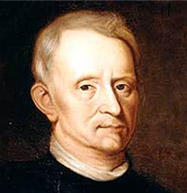
Robert Hooke
Robert Hooke (July 28, 1635 - March 3, 1703) was an English philosopher, physicist, astronomer, and inventor. Known for his numerous contributions to science, Hooke is particularly recognized for his formulation of Hooke's Law and his improvements to the microscope and telescope. more
You May Also Like
Source: Leonardo's Mountain of Clams and the Diet of Worms
Source: A Treatise of Human Nature
Source: The Log from the Sea of Cortez
Source: Wissenschaftlicher Briefwechsel mit Bohr, Einstein, Heisenberg u.a. Band IV, Teil III: 1955–1956. Scientific Correspondence with Bohr, Einstein, Heisenberg, a.o. Volume IV, Part III: 1955–1956