Quotessence
Home / Quotes / Quote by Rudy Giuliani

Quote by Rudy Giuliani

“I think that sometimes the most intelligent things that prosecutors do is when they exercise their discretion not to go forward with a case.”

Quote by Rudy Giuliani

Author
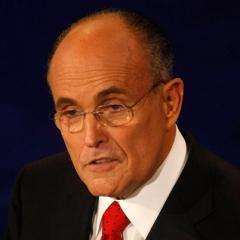
Rudy Giuliani
Rudy Giuliani

Rudy Giuliani is a former Mayor of New York City, renowned for his leadership during the September 11 attacks. He served as the Mayor from 1994 to 2001 and is recognized for his contributions to crime reduction and economic development. Giuliani's administration was marked by significant changes in the city's public safety and infrastructure. more

You May Also Like

“I always felt, and I still feel, that the media doesn't belong in a public official's private life. It's a very difficult balance, because if you are elected to public office, people have a right to know a great deal about you, and the press has an absolute obligation to report all of that. But the reality is that there are times in which the reporting is really happening for almost voyeuristic reasons, in the gossip columns. Maybe half of it is wrong, and half of it is correct, and a lot of it is exaggerated. You've just got to get used to that if you're in public life.”

“I can assure you that there is the greatest practical benefit in making a few failures early in life. You learn that which is of inestimable importance that there are a great many people in the world who are just as clever as you are. You learn to put your trust, by and by, in an economy and frugality of the exercise of your powers, both moral and intellectual; and you very soon find out, if you have not found it out before, that patience and tenacity of purpose are worth more than twice their weight of cleverness.”

“The sceptics end in the infidelity which asserts the problem to be insoluble, or in the atheism which denies the existence of any orderly progress and governance of things: the men of genius propound solutions which grow into systems of Theology or of Philosophy, or veiled in musical language which suggests more than it asserts, take the shape of the Poetry of an epoch.”

“Each such answer to the great question, invariably asserted by the followers of its propounder, if not by himself, to be complete and final, remains in high authority and esteem, it may be for one century, or it may be for twenty: but, as invariably, Time proves each reply to have been a mere approximation to the truth tolerable chiefly on account of the ignorance of those by whom it was accepted, and wholly intolerable when tested by the larger knowledge of their successors.”