Quotessence
Home / Quotes / Quote by Stephen Colbert

Quote by Stephen Colbert

Author

Stephen Colbert
Stephen Colbert

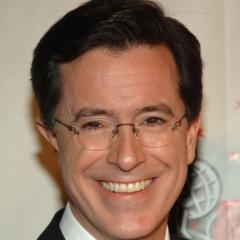
Stephen Colbert is an American comedian, writer, television host, and political commentator. He is known for his satirical style on the show 'The Colbert Report' and is recognized for his wit and humor, often offering sharp commentary on political and social issues. more

You May Also Like

“One of the things I think the next president has to do is to stop fanning people's fears. If we spend all our time feeding the American people fear and conflict and division, then they become fearful and conflicted and divided. And if we feed them hope and we feed them reason and tolerance, then they will become tolerant and reasonable and hopeful.”

“Consider that in a galaxy far, far away (otherwise known as the 1990s), President Clinton felt that he had to assure an isolationist Republican Congress - repeat after me, an isolationist Republican Congress - that the 20,000 U.S. peacekeeping troops he promised Bosnia as part of the Dayton Accords would only stay deployed for a single calendar year.”

“The Petraeus-Crocker testimony is the kind of short-lived event on which the Administration has relied to shore up support for the war: the 'Mission Accomplished' declaration, the deaths of Uday and Qusay Hussein, Saddam's capture, the transfer of sovereignty, the three rounds of voting, the Plan for Victory, the death of Abu Musab al-Zarqawi. Every new milestone, however illusory, allows the Administration to avoid thinking ahead, to the years when the mistakes of Iraq will continue to haunt the U.S.”

“Do we pour $40 billion into grandiose Louisiana engineering projects or do we instead put up no trespassing- signs in the areas below sea level? All are hard choices with various merits and pains. The important thing, however, is for America to decide whether the current policy of inaction is really the way we want to deal with the worst natural disaster in our history.”

“True belief is not about blind submission. It is about open-eyed acceptance, and acceptance requires persistent distance from the truth, and that distance is doubt. Doubt, in other words, can feed faith, rather than destroy it. And it forces us, even while believing, to recognize our fundamental duty with respect to God's truth: humility. We do not know. Which is why we believe.”