Quotessence
Home / Quotes / Quote by James Madison

Quote by James Madison

Work

The Federalist, on the New Constitution, Written in the Year 1788

Composed by Alexander Hamilton, James Madison, and John Jay, this collection of essays advocates for the ratification of the U.S. Constitution, offering insights into the structure and function of the federal government. more

Author
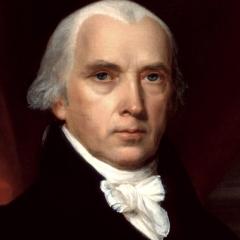
James Madison
James Madison

James Madison, the 4th President of the United States, was born on March 16, 1751, and died on June 28, 1836. He was a key figure in drafting the U.S. Constitution and had a profound impact on the political system of the United States. more

You May Also Like

“The regular distribution of power into distinct departments; the introduction of legislative balances and checks; the institution of courts composed of judges holding their offices during good behavior; the representation of the people in the legislature by deputies of their own election . . . They are means, and powerful means, by which the excellences of republican government may be retained and its imperfections lessened or avoided.”

“The unity of government which constitutes you one people is also now dear to you. It is justly so, for it is a main pillar in the edifice of your real independence, the support of your tranquility at home, your peace abroad, of your safety, of your prosperity, of that very liberty which you so highly prize.”

“The genius of Republican liberty, seems to demand on one side, not only that all power should be derived from the people; but, that those entrusted with it should be kept in dependence on the people, by a short duration of their appointments; and, that, even during this short period, the trust should be placed not in a few, but in a number of hands.”

“It is a misfortune incident to republican government, though in a less degree than to other governments, that those who administer it, may forget their obligations to their constituents, and prove unfaithful to their important trust.”

“The first question that offers itself is, whether the general form and aspect of the government be strictly republican? It is evident that no other form would be reconcileable with the genius of the people of America; with the fundamental principles of the revolution; or with that honourable determination which animates every votary of freedom, to rest all our political experiments on the capacity of mankind for self-government.”

“What is to be the consequence, in case the Congress shall misconstrue this part [the necessary and proper clause] of the Constitution and exercise powers not warranted by its true meaning, I answer the same as if they should misconstrue or enlarge any other power vested in them . . . the success of the usurpation will depend on the executive and judiciary departments, which are to expound and give effect to the legislative acts; and in a last resort a remedy must be obtained from the people, who can by the elections of more faithful representatives, annul the acts of the usurpers.”