Quotessence
Home / Quotes / Quote by Colin Mochrie

Quote by Colin Mochrie

“The comedy community is fairly supportive of human beings in general. There are some things you can teach with comedy that people can't learn by being hit over the head with facts. I think, as comedians, we're trying to change the world. It's slow, but sure.”

Quote by Colin Mochrie

Author
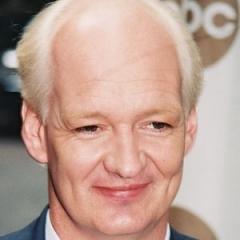
Colin Mochrie
Colin Mochrie

Colin Mochrie is a Canadian actor and comedian born November 30, 1957, in Glasgow, Scotland, who moved to Canada as a child. He gained worldwide fame as a core cast member of the improvisational comedy show "Whose Line Is It Anyway?" Known for his exceptional improvisational skills, physical comedy, and unique character work, Mochrie has become one of the most recognizable faces in improv comedy. His performances on the show, which ran from 1998 to 2007, earned multiple Emmy nominations and established him as a pioneer in television improv comedy. more

You May Also Like

“There is a difficult transition in management from being the knowledgeable expert and the problem solver to becoming a process architect. The importance of good process in organizations is undervalued and people seldom get credited for putting good processes in place. It makes sense therefore that C-level executives don't want to delegate expertise and problem solving tasks which help them to "shine" and attract widespread recognition.”

“I recall a conversation with the CEO of large electrical equipment MNC in which he began by asking me to guess how many innovation centres his firm had around the world. My guess was nowhere near the 160 that turned out to be the answer. Not surprisingly this CEO recognized that his firm's ability to innovate was being hampered by the huge size of their footprint which brought few benefits as it was inefficient, there was duplication across sites and competition between them. In this and most other cases, the costs of the expanded footprint outweigh the benefits.”

“Companies tend not to recognize that the way global projects have to be organized and run is fundamentally different from how co-located projects are managed. Everything is different in global projects from the need for organizational stability, a shared strategic context driving the project, the building of a competence in dispersed working, greater focus on planning the project to the need for trust between sites. Yet, most firms merely transfer their co-located best practice to a global arena. This will inevitably result in problems, delays and cost overruns.”

“Getting global innovation projects right is really important as they create competitive advantage two ways. When the knowledge for an innovation is from different sites around the world, it's very much more difficult for competitors to copy these innovation - they'd have to access the same knowledge from the same places. Secondly, costs and time to market can be significantly reduced leading to first mover advantage through parallel development in global projects.”

“Implementing any major changes to the way companies operate requires time and determination and the shift to globally integrated innovation is no exception - it calls for new capabilities to be built, changes in the structure of the innovation organization, new systems, processes and mindsets. The scope and scale of this task shouldn't prevent executives from starting down the path of change as the systemic nature of innovation activities means that every single element of change that's brought about will make a difference.”

“I'm surprised how often I'm asked about being a man with a woman narrator. I'm not the first, nor will I be the last. It's been done forever, but we seem to forget that. The whole notion of "write what you know" is not just boring, but wrong. Lately it seems like every novel has to be a memoir. I'm a boring person, but I'm a writer with a relatively vivid imagination. And when people ask me about how I find the voice of a woman, I tell them that my life is run by women.”

“I love a lot of American writers, but I think that for the most part the scope of what's accepted as great American writing is very limited. What we have is good, but it's limited. There's not enough engagement with the world. Our literature's not adventurous enough. The influence of MFA writing tends to make things repetitive. The idea that writing can be taught has changed the whole conversation in the U.S.”