“I find that teaching and the students keep life going, and I would never accept any position in which somebody has invented a happy situation for me where I don't have to teach. Never.”
Quote by Richard P. Feynman
Work
Surely You're Joking Mr Feynman: Adventures of a Curious Character as Told to Ralph Leighton
The book presents a personal account of Feynman's life, highlighting his curious nature, wit, and unconventional approach to science and life. It includes tales from his childhood, academic pursuits, and professional experiences, offering insights into his character and thought process. more
Author
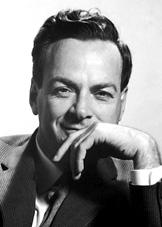
Richard P. Feynman
Richard P. Feynman was a renowned theoretical physicist known for his contributions to quantum mechanics and quantum electrodynamics. He was also an exceptional physicist in the field of physics education, with popular science books like 'Surely You're Joking, Mr. Feynman!' that have won the hearts of readers. more
You May Also Like
“Although we are free by the law, we are not so in practice.”
Source: Genius: the life and science of Richard Feynman
“No language which lends itself to visualizability can describe quantum jumps.”
“The NSA's vision statement is: keep the problem going so the money keeps flowing.”
“The spooks are all cowards. Sunlight is the solution to these things.”
“Whatever you do, always give 100%. Unless you're donating blood.”