Quotessence
Home / Quotes / Quote by Yevgeny Zamyatin

Quote by Yevgeny Zamyatin

“All truths are erroneous. This is the very essence of the dialectical process: today's truths become errors tomorrow; there is no final number. This truth (the only one) is for the strong alone. Weak-nerved minds insist on a finite universe, a last number; they need, in Nietzsche's words, "the crutches of certainty". The weak-nerved lack the strength to include themselves in the dialectic syllogism.”

Quote by Yevgeny Zamyatin

Author
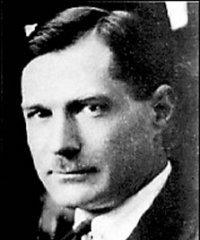
Yevgeny Zamyatin
Yevgeny Zamyatin

Russian author known for his dystopian novel 'We'. Born on February 1, 1884, in Taganrog, Russia, he passed away on March 10, 1937. more

You May Also Like

“In order to write about the machine you have to know it, to live with it, to love it (or hate it). I think that true writing could be done on industrial subjects by people who work in industry, who are firmly linked with it. But ... and here is the opposite 'but', the technology of literary craftsmanship is itself a very fine and complex matter. Qualified specialists from industry prove themselves dilettantes in the field of literature. The needed synthesis is not yet in sight.”

“The pretense that humans are superior to nonhumans is entirely unsupportable. I have seen no compelling evidence that humans are particularly more "intelligent" than any other creature. I have had long and fruitful relationshis with many nonhuman animals, both domesticated and wild, and have reveled in the bouquet of radically different intelligences - different forms, not different "quantities" that they have introduced to me, each in his or her own time, in his or her own way.”

“The world is a big place. There are lots of smart people in it. Entrepreneurs are kidding themselves if they think they have any kind of monopoly on knowledge. And, sure as I'm a Macintosh user, on the same day that an entrepreneur tells this lie, the venture capitalist will have met with another company that's doing the same thing.”

“If you have to do with one who is unquestionably a slanderer, do not excuse him by calling him frank and free-spoken; do not call one who is notoriously vain, liberal and elegant; do not call dangerous levities mere simplicity; do not screen disobedience under the name of zeal; or arrogance, of frankness; or evil intimacy, of friendship. No, my friends, we must never, in our wish to shun slander, foster or flatter vice in others: but we must call evil evil, and sin sin, and so doing we shall serve God's glory.”