“Whereas the property-owning middle class could win freedom for themselves on the basis of rights to property--thus excluding others from the freedom they gain--the property-less working class possess nothing but their title as human beings. Thus they can liberate themselves only by liberating all humanity.”
Quote by Peter Singer
Work
Marx: A Very Short Introduction
Marx: A Very Short Introduction provides an accessible introduction to the works and theories of Karl Marx, exploring his impact on modern political and economic thought. The book delves into Marx's analysis of capitalism, his concept of class struggle, and his vision for a communist society. more
Author
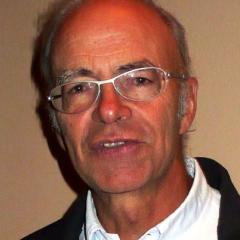
Peter Singer
Peter Singer (born July 6, 1946) is an Australian moral philosopher renowned for his work in applied ethics, particularly animal liberation, effective altruism, and global poverty. He is a professor of bioethics at Princeton University and author of 'Animal Liberation,' a foundational text of the animal rights movement. Singer argues for extending moral consideration to all sentient beings based on utilitarian principles. His controversial views have sparked global debates but profoundly influenced contemporary ethics, charity practices, and animal welfare policies. more
You May Also Like
Source: Ethics in the Real World: 82 Brief Essays on Things That Matter
Source: Form and actuality
“We have learned that history is something that takes no notice whatever of our expectations.”
Source: Routledge Revivals: Man and Technics (1932): A Contribution to a Philosophy of Life
Source: Aphorisms
Source: Aphorisms
Source: The decline of the West
“Peace is a desire, war is a fact; and history has never paid heed to human desires and ideals.”
“Fortunately, at the last hour, there were always a few soldiers to save Civilization.”
“The I of the basic word I-Thou is different from that of the basic word I-It.”
“Persons appear by entering into relation to other persons.”