Quotessence
Home / Quotes / Quote by Linda Pastan

Quote by Linda Pastan

“What We Want What we want is never simple. We move among the things we thought we wanted: a face, a room, an open book and these things bear our names -- now they want us. But what we want appears in dreams, wearing disguises. We fall past, holding out our arms and in the morning our arms ache. We don't remember the dream, but the dream remembers us. It is there all day as an animal is there under the table, as the stars are there.”

Quote by Linda Pastan

Work

Carnival Evening: New and Selected Poems, 1968-1998

Browse quotes and source details for this work. more

Author
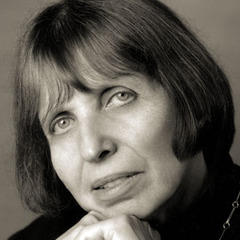
Linda Pastan
Linda Pastan

Linda Pastan is an acclaimed American poet whose introspective and emotionally charged verse has made her a prominent figure in the literary world for decades. Born on May 27, 1932, she has reflected on themes of love, loss, and the human condition in her poetry. more

You May Also Like

“How do we know we're not people in a movie?' she asked. I looked at her not knowing how to reply. Mama, [...] how do we know that things are real?' Great. Now we have a junior existentialist in the house. Well, we don't know. We just have to hope that what we think is real is real.' But how do we know?' she asked, insistently. Ah, a scientist, who wants empirical evidence. We don't know. We just have to hope.' Mama, how do we know things aren't a dream? You know, how sometimes life feels like a dream? Do you ever feel that way?' Yes, sweetie, I feel that way all the time.”

“We must all allow ourselves the fantasy of projection from time to time, a chance to clothe ourselves in the imaginary gowns and tails of what has never been and never will be. This gives some polish to our tarnished lives, and sometimes we may choose one dream over another, and in the choosing find some respite from ordinary sadness. After all, we, none of us, can ever untangle the knot of fictions that make up that wobbly thing we call a self.”

“The second dream is more difficult to convey. Nothing happened. He scarcely saw a face, scarcely heard a voice say, “That is your friend,” and then it was over, having filled him with beauty and taught him tenderness. He could die for such a friend, he would allow such a friend to die for him; they would make any sacrifice for each other, and count the world nothing, neither death nor distance nor crossness could part them, because “this is my friend.”