Quotessence
Home / Quotes / Quote by Milan Kundera

Quote by Milan Kundera

“We can never establish with certainty what part of our relations with others is the result of our emotions—love, antipathy, charity, or malice—and what part is determined by the constant power play among individuals. True human goodness, in all its purity and freedom, can come to the fore only when its recipient has no power. Mankind's true moral test, its fundamental test (which lies deeply buried from view), consists of its attitude towards those who are at its mercy: animals. And in this respect mankind has suffered a fundamental debacle, a debacle so fundamental that all others stem from it.”

Quote by Milan Kundera

Work

The Unbearable Lightness of Being

Browse quotes and source details for this work. more

Author
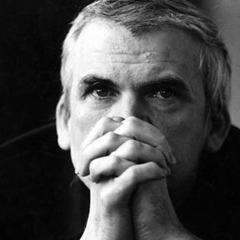
Milan Kundera
Milan Kundera

Milan Kundera is a renowned Czech-French writer known for his profound psychological insights and unique narrative techniques. His works often explore themes of personal freedom, love, morality, and existentialism, with notable titles including 'The Unbearable Lightness of Being' and 'The Joke'. more

You May Also Like

“I wasn't sure whether I liked "goodness" so much as I had supposed. This is a very terrible experience. As long as what you are afraid of is something evil, you may still hope that the good may come to your rescue. But suppose you struggle through to the good and find that it also is dreadful? How if food itself turns out to be the very thing you can't eat, and home the very place you can't live, and your very comforter the person who makes you uncomfortable? Then, indeed, there is no rescue possible: the last card has been played.”

“Because God who has made us in his image has created all of creation to point us to himself in every conceivable way. We are not incidental to what he has done. We are central to it. Which makes us see that his love for us is so impossible and unimaginably great that it really is infinitely too much for us to bear. If he did not shield us from it in some way, it would really and truly undo us. It would destroy us. Imagine a goodness so good and a beauty so beautiful and a truth so true and a light so white and so impossibly blindingly bright that apart from God's infinite love and mercy sheltering us from it, we could not bear it even for a moment. And then imagine a God who shows us his infinite love and mercy precisely so we can bear it -- and not just for a moment, but for all eternity.”

“Moving from childhood to adulthood - that's not growing up. Moving from selfishness to selflessness - that's growing up. Moving from I to We - that's growing up. Moving from my culture, my country, my religion, to our cultures, our countries, our religions - that's growing up.”

“... 'I understand what you're saying,' he [Perry] said to Reverend Walsh. 'But what if a person isn't able to have faith?' 'Not everyone finds faith overnight. Faith is rarely easy. But if you've ever done a good thing, and felt a glow in your heart, then that's a little message from God. He's telling you that Christ is in you, and that you have the freedom and capacity to pursue a closer relationship with him. Seek, and ye shall find.' 'It's approximately the same if you're a Jew,' the rabbi said, 'although we tend to emphasize that you're a Jew whether you feel like it or not. It's more a matter of God tracking you down than of you finding God.' 'I don't think our positions are so dissimilar in that respect,' Reverend Walsh said stiffly. ... 'But so,' he [Perry Hildebrandt] said, 'what if I feel the kind of glow you're talking about, but it doesn't lead me to God? What if it's just one of those feelings that any sentient animal might have? If I never find God, or He never finds me, it sound's like you're saying, basically, that I'm damned.' 'In principle, I suppose that is the doctrine,' Reverend Walsh said. 'But you're young, and life is long. There's a near infinity of moments when you might receive God's grace. All it takes is one moment.' 'In the meantime,' the rabbi said, 'I think it's enough to be a mensch.”