Quotessence
Home / Quotes / Quote by Thomas S. Monson

Quote by Thomas S. Monson

“The teacher not only shapes the expectations and ambitions of her pupils, but she also influences their attitudes toward their future and themselves. If she is unskilled, she leaves scars on the lives of youth, cuts deeply into their self-esteem, and distorts their image of themselves as human beings. But if she loves her students and has high expectations of them, their self-confidence will grow, their capabilities will develop, and their future will be assured.”

Quote by Thomas S. Monson

Author
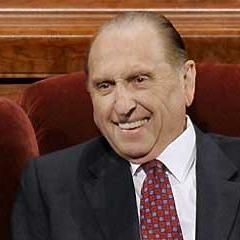
Thomas S. Monson
Thomas S. Monson

Thomas S. Monson was an American author known for his religious works. Born on August 21, 1927, he gained recognition in the Mormon Church. more

You May Also Like

“The character of a child is formed largely during the first twelve years of his life. He spends 16 times as many waking hours in the home as in the school, and 126 times as many hours in the home as in the church. Each child is, to a great degree, what he is because of the ever-constant influence of home environment and the careful or neglectful training of parents. Home is the best place for the child to learn self-control, to learn that he must submerge himself for the good of another. It is the best place in which to develop obedience, which nature and society will later demand.”

“I shall never forget my first encounter with gorillas. Sound preceded sight. Odor preceded sound in the form of an overwhelming, musky-barnyard, humanlike scent. The air was suddenly rent by a high-pitched series of screams followed by the rhythmic rondo of sharp pok-pok chestbeats from a great silverbacked male obscured behind what seemed an impenetrable wall of vegetation.”

“Crying, that is, sobbing is the earliest and deepest way to release tension. Infants can cry almost from the moment of birth, and do so easily following every stress that produces a state of tension in the body... Human beings are the only creatures who can react in this way to stress and tension. Most probably, they are the only ones who need this form of release.”

“On a long flight, after periods of crisis and many hours of fatigue, mind and body may become disunited until at times they seem completely different elements, as though the body were only a home with which the mind has been associated but by no means bound. Consciousness grows independent of the ordinary senses. You see without assistance from the eyes, over distances beyond the visual horizon. There are moments when existence appears independent even of the mind. The importance of physical desire and immediate surroundings is submerged in the apprehension of universal values.”

“Then what am I - the body substance which I can see with my eyes and feel with my hands? Or am I this realization, this greater understanding which dwells within it, yet expands through the universe outside; a part of all existence, powerless but without need for power; immersed in solitude, yet in contact with all creation? There are moments when the two appear inseparable, and others when they could be cut apart by the merest flash of light.”