Quotessence
Home / Quotes / Quote by Jared Taylor

Quote by Jared Taylor

“Trust in the familiar seems to be matched by wariness of the unfamiliar. Jennifer Richeson of Northwestern University has conducted experiments in which white subjects had to interact in some way with a white or a black man before taking a mental test. Those who dealt with the black man got lower scores on the test, and their brain scans showed what Prof. Richeson called “heightened activity in areas of the brain associated with regulating our thoughts and emotions.” She interpreted this to mean that white subjects were struggling with the “awkwardness” or “exhaustion” of dealing with a black man, and that this interfered with their ability to take the mental test. Researchers at Harvard and New York University had white and black subjects look repeatedly at a series of photographs of black and white faces, all with neutral expressions. Every time the subjects looked at one particular black face and one particular white face they got a mild electric shock. Lie detector-type devices showed that subjects would sweat—a typical stress reaction—when they saw the two faces they associated with the shocks. The researchers showed the photo series several times again, but without the shocks. White subjects quickly stopped sweating when they saw the white face formerly associated with the shock, but continued to sweat when they saw the black face. Black subjects had the opposite reaction, continuing to sweat when they saw the white but not the black face. Mahzarin Banaji, the study’s leader, concluded that this was a sign of natural human wariness of unfamiliar groups.”

Quote by Jared Taylor

Work

White Identity: Racial Consciousness in the 21st Century

Browse quotes and source details for this work. more

Author
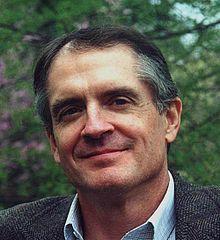
Jared Taylor
Jared Taylor

Jared Taylor, born on September 15, 1951, is an American journalist known for his views on racism and immigration issues. He was the editor of 'American Renaissance' magazine and has contributed articles to various publications, including 'The American Conservative' and 'The New American'. more

You May Also Like

“I could watch him do this until morning — never asking questions and never interrupting his work. I worship quietly — his intense focus and attention to detail and then, out of no where, I realize the inconvenient, inappropriate truth: ‘I love this man… and it has swallowed me.”

“MRI testing again shows what may be the underlying brain mechanism. The amygdalae are two small lobes in the brain associated with fear, arousal, and emotions. When they are active, it is thought to be a sign of vigilance, meaning that the brain is wary and wants more information. A study at Massachusetts General Hospital found that when subjects looked at photographs of faces—half were white, half were black—MRI scans found high amygdala activity. This was considered to be a normal reaction to unfamiliar faces. When the subjects looked at the photographs a second time the faces were more familiar; only the other-race faces continued to provoke high amygdala activity. This was true for both blacks and whites, suggesting that encounters with people of different races keep the brain at a higher level of watchfulness. Amygdalae notice race even when a person does not. William A. Cunningham of Ohio State University showed white subjects pictures of faces for only 30 milliseconds—not long enough for the subjects to be conscious of them—but black faces triggered greater amygdala activity than white faces. When he showed faces for a half a second—long enough for people to notice race—he found that black faces prompted greater activity in the pre-frontal areas, a part of the brain associated with detecting internal conflicts and controlling conscious behavior. This suggested the subjects were trying to suppress certain feelings about blacks. Steven Neuberg of Arizona State University attributes instinctive bias to evolution during our hunter-gatherer past. “By nature, people are group-living animals—a strategy that enhances individual survival and leads to what we might call a ‘tribal psychology’, ” he says. “It was adaptive for our ancestors to be attuned to those outside the group who posed threats such as to physical security, health or economic resources.”

“What are the implications of ethnic identity for multi-racial and multi-ethnic societies? Tatu Vanhanen of the University of Tampere, Finland, has probably researched the effects of ethnic diversity more systematically than anyone else. In a massive, book-length study, he measured ethnic diversity and levels of conflict in 148 countries, and found correlations in the 0.5 to 0.9 range for the two variables, depending on how the variables were defined and measured. Homogeneous countries like Japan and Iceland show very low levels of conflict, while highly diverse countries like Lebanon and Sudan are wracked with strife. Prof. Vanhanen found tension in all multi-ethnic societies: “Interest conflicts between ethnic groups are inevitable because ethnic groups are genetic kinship groups and because the struggle for existence concerns the survival of our own genes through our own and our relatives’ descendants.” Prof. Vanhanen also found that economic and political institutions make no difference; wealthy, democratic countries suffer from sectarian strife as much as poor, authoritarian ones: “Ethnic nepotism belongs to human nature and . . . it is independent from the level of socioeconomic development (modernization) and also from the degree of democratization.” Others have argued that democracy is particularly vulnerable to ethnic tensions while authoritarian regimes like Saddam Hussein’s Iraq or Tito’s Yugoslavia can give the impression of holding it in check. One expert writing in Foreign Affairs explained that for democracy to work “the party or group that loses has to trust the new majority and believe that its basic interests will still be protected and that there is nothing to fear from a change in power.” He wrote that this was much less likely when opposing parties represent different races or ethnicities. The United Nations found that from 1989 to 1992 there were 82 conflicts that had resulted in at least 1,000 deaths each. Of these, no fewer than 79, or 96 percent, were ethnic or religious conflicts that took place within the borders of recognized states. Only three were cross-border conflicts. Wars between nations are usually ethnic conflicts as well. Internal ethnic conflict has very serious consequences. As J. Philippe Rushton has argued, “The politics of ethnic identity are increasingly replacing the politics of class as the major threat to the stability of nations.” One must question the wisdom of then-president Bill Clinton’s explanation for the 1999 NATO bombing of Serbia: “[T]he principle we and our allies have been fighting for in the Balkans is the principle of multi-ethnic, tolerant, inclusive democracy. We have been fighting against the idea that statehood must be based entirely on ethnicity.” That same year, the American supreme commander of NATO, Wesley Clark, was even more direct: “There is no place in modern Europe for ethnically pure states. That’s a 19th century idea and we are trying to transition into the 21st century, and we are going to do it with multi-ethnic states.”

“Schools have tried just about anything to try to calm racial tensions: professional mediation, multi-cultural training, diversity celebrations, anger-management classes, and a host of other interventions. In 2004, the Murrieta Valley Unified School District, in Riverside County, California, even considered a rule that would have forbidden any student to “form or openly participate in groups that tend to exclude, or create the impression of the exclusion of, other students.” The school board narrowly rejected the proposal when it was pointed out that the ban would have prohibited membership in the Hispanic group, La Raza, and could have been read to forbid playing rap music around white students. Absurd measures like this show how desperate schools are to solve the race problem. A 2003 survey found that 5.4 percent of high-school students had stayed home at least once during the previous month because they were physically afraid. This was an increase over 4.4 percent ten years earlier. Racial violence was undoubtedly an important factor. The circumstances under which some of our least advantaged citizens must try to get an education are nothing short of scandalous. Is it a wonder their test scores are low, that many drop out, that they fail to see the value of an education? How many times must school race riots be put down by SWAT teams before school authorities realize that this may be a problem that will not be cured with sensitivity training? The purpose of schools is to educate, not to force on children integration of a kind their parents do not even practice.”

“By mid-2009, integration had been officially attempted in only two of the state’s 33 prisons, beginning with non-violent inmates considered most likely to accept it. At Sierra Conservation Center, southeast of Sacramento, integration began in the fall of 2008. For three days, hundreds of prisoners protested by refusing to work, eat, or leave their cells. Rules violations increased five-fold. Prisoners refused to share cells even though they could be punished with withdrawal of television, commissary, and exercise privileges, and have up to 90 days added to their sentences. 'To me, this is like using us like lab rats, to see if it works,' said black inmate Glenn Brooks. 'It ain’t ever going to work. All it’s going to do is get somebody hurt, get somebody killed.”

“Serving officers dare not criticize diversity for fear it will kill their careers. Only after he retired did Army Green Beret Major Andy Messing say that Special Forces units should be homogeneous because this promotes cohesion. He said differences of race or religion add to the tensions of a grinding training regimen and perilous combat missions. A recent book-length study of cohesion in Civil War units found that soldiers were less likely to desert if they were fighting alongside men who resembled them in ethnicity, religion, and occupation, and who came from the same part of the country. Authors Dora Costa and Matthew Kahn concluded that men were most likely to risk their lives for men who were most like themselves. They also found that Union veterans’ health was worse in old age if they had seen a lot of combat but were surprised to discover that this effect disappeared for soldiers who had fought in very homogeneous units. Fighting alongside close comrades immunized them against battle trauma.”

“The more intimate the setting, the greater the challenges of diversity. Adopted children, for example, often report they never felt they fit in. In a British study of adults who were adopted as children, 46 percent of whites adopted by whites said they felt a sense of not belonging. For non-whites adopted by whites, the figure rose to close to 75 percent. Researchers reported that their constant refrain was, “Love is not enough.” There can be worse: The authors of a 2005 study on domestic violence in the United States reached the sobering conclusion that “the incidence of spousal homicide is 7.7 times higher in interracial marriages compared to intraracial marriages.” One study for the period 1979 to 1981 found that white men who married black women were 21.4 times more likely to be killed by their spouses than white men who married white women. A white woman increased her risk of being killed 12.4 times by marrying a black man. Marrying a white did not appreciably change a black person’s risk of being killed by his or her spouse.”

“Most white Americans believe elections should be a choice of policies rather than expressions of racial identity. If Americans vote for a candidate because of his racial agenda, representative government is crippled. Democratic systems operate well only when politicians recognize that even if their opponents’ approaches may be different, all parties are trying to work for the good of the country as a whole. When politics fracture along racial lines, it becomes easy to assume that elected officials work for narrow, ethnic interests, and political contests become very bitter. The ultimate logic of politics in a racially fractured electorate is a system of quotas in which seats in elective bodies are set aside in proportion to the racial composition of the population. This is the formula hopelessly divided countries such as Lebanon and immediate post-white-rule Zimbabwe and South Africa hit upon. It could be the solution for other divided countries such as Iraq, Sudan, Fiji, Malaysia, or Sri Lanka, where politics is a perpetual squabble over ethnic interests. There is already implied support for proportional racial representation in the federal approach to voter districts. The US Department of Justice has long required that congressional districts be gerrymandered to create black and Hispanic majorities that are expected to vote along racial lines and send one of their own to Congress. The department also routinely sues cities that choose their governing bodies in at-large elections. If, for example, a city is 30 percent black but has no blacks on the city council because all candidates must appeal to the entire city, voting must be switched to a ward system, with wards drawn so that blacks—by voting for people like themselves have approximately 30 percent of the council seats. In 2006, the Justice Department used precisely this argument to threaten Euclid, Ohio, with litigation if it did not replace its at-large elections with a system of eight separate wards. In 2010, Hispanics made the same argument when they sued the city of Compton: They claimed that an at-large voting system shut them out and kept the city council all black.”

“Although political representation by racial quota is the effect of government policy, it is not yet respectable to call for it explicitly. When President Bill Clinton tried to appoint Lani Guinier as Assistant Attorney General for Civil Rights her appointment failed, in part because of Miss Guinier’s advocacy of representation by race. In her view, if blacks were 13 percent of the US population, 13 percent of seats in Congress should be set aside for them. It does not cause much comment, however, when the Democratic Party applies this thinking to its selection of delegates to presidential conventions. Each state party files an affirmative action plan with the national party, and many states set quotas. For the 2008 Democratic Convention, California mandated an over-representation of non-white delegates. Blacks, Asians, and Hispanics were only 4.6, 5.2, and 21.1 percent, respectively, of the Democratic electorate, but had to be 16, 9, and 26 percent of the delegates. Other states had similar quotas. Procedures of this kind do lead to diversity of delegates but suggest that race is more important than policy. Perhaps it is. In Cincinnati, where blacks are 40 to 45 percent of the population, Mayor Charlie Luken complained that the interests of blacks and whites seemed so permanently in conflict that “race gets injected into every discussion as a result.” In other words, any issue can become racial. In 2004, the Georgia legislature passed a bill to stop fraud by requiring voters to show a state-issued ID at the polls. People without drivers’ licenses could apply for an ID for a nominal fee. Black legislators felt so strongly that this was an attempt to limit the black vote that they did not merely vote against the law; practically the entire black delegation stormed out of the Capitol when the measure passed over their objections. In 2009, when Congress voted a stimulus bill to get the economy out of recession, some governors considered refusing some federal funds because there were too many strings attached. Jim Clyburn, a black South Carolina congressman and House Majority Whip, complained that rejecting any funding would be a “slap in the face of African-Americans.” Race divides Cook County, Illinois, which contains Chicago. In 2007, when the black president of the county board, Todd Stroger, could not get his budget passed, his floor leader William Beavers-also black—complained that it was “because he’s black.” He said there was only one real question: 'Who’s gonna control the county—white or black—that’s all this is.”

“Whites impose these rules on themselves because they know blacks, in particular, are so quick to take offense. Radio host Dennis Prager was surprised to learn that a firm that runs focus groups on radio talk shows excludes blacks from such groups. It had discovered that almost no whites are willing to disagree with a black. As soon as a black person voiced an opinion, whites agreed, whatever they really thought. When Mr. Prager asked his listening audience about this, whites called in from around the country to say they were afraid to disagree with a black person for fear of being thought racist. Attempts at sensitivity can go wrong. In 2009, there were complaints from minority staff in the Delaware Department of Transportation about insensitive language, so the department head, Carolann Wicks, distributed a newsletter describing behavior and language she considered unacceptable. Minorities were so offended that the newsletter spelled out the words whites were not supposed to use that the department had to recall and destroy the newsletter. The effort whites put into observing racial etiquette has been demonstrated in the laboratory. In experiments at Tufts University and Harvard Business School, a white subject was paired with a partner, and each was given 30 photographs of faces that varied by race, sex, and background color. They were then supposed to identify one of the 30 faces by asking as few yes-or-no questions as possible. Asking about race was clearly a good way to narrow down the possibilities —whites did not hesitate to use that strategy when their partner was white—but only 10 percent could bring themselves to mention race if their partner was black. They were afraid to admit that they even noticed race. When the same experiment was done with children, even white 10- and 11-year olds avoided mentioning race, though younger children were less inhibited. Because they were afraid to identify people by race if the partner was black, older children performed worse on the test than younger children. “This result is fascinating because it shows that children as young as 10 feel the need to try to avoid appearing prejudiced, even if doing so leads them to perform poorly on a basic cognitive test,” said Kristin Pauker, a PhD candidate at Tufts who co-authored the study. During Barack Obama’s campaign for President, Duke University sociologist Eduardo Bonilla-Silva asked the white students in his class to raise their hands if they had a black friend on campus. All did so. At the time, blacks were about 10 percent of the student body, so for every white to have a black friend, every black must have had an average of eight or nine white friends. However, when Prof. Bonilla-Silva asked the blacks in the class if they had white friends none raised his hand. One hesitates to say the whites were lying, but there would be deep disapproval of any who admitted to having no black friends, whereas there was no pressure on blacks to claim they had white friends. Nor is there the same pressure on blacks when they talk insultingly about whites. Claire Mack is a former mayor and city council member of San Mateo, California. In a 2006 newspaper interview, she complained that too many guests on television talk shows were “wrinkled-ass white men.” No one asked her to apologize. Daisy Lynum, a black commissioner of the city of Orlando, Florida, angered the city’s police when she complained that a “white boy” officer had pulled her son over for a traffic stop. She refused to apologize, saying, “That is how I talk and I don’t plan to change.” During his 2002 reelection campaign, Sharpe James, mayor of Newark, New Jersey, referred to his light-skinned black opponent as “the faggot white boy.” This caused no ripples, and a majority-black electorate returned him to office.”