“A man who tells secrets or stories must think of who is hearing or reading, for a story has as many versions as it has readers. Everyone takes what he wants or can from it and thus changes it to his measure. Some pick out parts and reject the rest, some strain the story through their mesh of prejudice, some paint it with their own delight. A story must have some points of contact with the reader to make him feel at home in it. Only then can he accept wonders.”
Quote by John Steinbeck
Work
Travels with Charley and Later Novels, 1947-1962
This compilation includes the renowned travelogue 'Travels with Charley,' which recounts the author's cross-country journey with his dog, and several other novels written during the specified period. more
Author
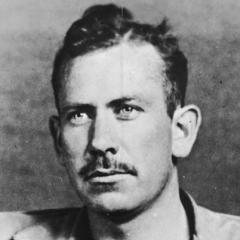
John Steinbeck
John Steinbeck was an American author renowned for his profound depiction of American society and the lives of farmers. His works often explore themes of poverty, social injustice, and human nature. Steinbeck was awarded the Nobel Prize in Literature in 1962 for his significant contribution to American literature. more
You May Also Like
Source: The Winter of our Discontent
“Good God, what a mess of draggle-tail impulses a man is--and a woman too, I guess.”
Source: Travels with Charley and Later Novels, 1947-1962
“For the most part people are not curious except about themselves.”
Source: The Winter of our Discontent
Source: The Winter of our Discontent
Source: The Plays of Oscar Wilde
Source: The Gay Science: With a Prelude in Rhymes and an Appendix of Songs
“For the strength of the Pack is the Wolf, and the strength of the Wolf is the Pack.”
Source: The Second Jungle Book
Source: Things Fall Apart: Authoritative Text, Contexts and Criticism