Quotessence
Home / Quotes / Quote by Aristotle

Quote by Aristotle

“Also our fellow competitors, who are indeed the people just mentioned - we do not compete with men who lived a hundred centuries ago, or those yet not born, or the dead, or those who dwell near the Pillars of Hercules, or those whom, in our opinion or that of others, we take to be far below us or far above us. So too we compete with those who follow the same ends as ourselves; we compete with our rivals in sport or in love, and generally with those who are after the same things; and it is therefore these whom we are bound to envy beyond all others. Hence the saying.”

Quote by Aristotle

Author
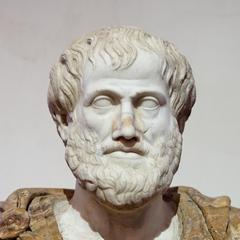
Aristotle
Aristotle

Aristotle, a renowned Greek philosopher, is one of the founders of Western philosophy. His thoughts covered a wide range of fields, including ethics, logic, politics, and had a profound impact on the world. more

You May Also Like

“Even when laws have been written down, they ought not always to remain unaltered. As in other sciences, so in politics, it is impossible that all things should be precisely set down in writing; for enactments must be universal, but actions are concerned with particulars. Hence we infer that sometimes and in certain cases laws may be changed.”

“When we look at the matter from another point of view, great caution would seem to be required. For the habit of lightly changing the laws is an evil, and, when the advantage is small, some errors both of lawgivers and rulers had better be left; the citizen will not gain so much by making the change as he will lose by the habit of disobedience.”

“Laws, when good, should be supreme; and that the magistrate or magistrates should regulate those matters only on which the laws are unable to speak with precision owing to the difficulty of any general principle embracing all particulars.”

“The goodness or badness, justice or injustice, of laws varies of necessity with the constitution of states. This, however, is clear, that the laws must be adapted to the constitutions. But if so, true forms of government will of necessity have just laws, and perverted forms of government will have unjust laws.”

“Now what is just and right is to be interpreted in the sense of 'what is equal'; and that which is right in the sense of being equal is to be considered with reference to the advantage of the state, and the common good of the citizens. And a citizen is one who shares in governing and being governed. He differs under different forms of government, but in the best state he is one who is able and willing to be governed and to govern with a view to the life of virtue.”

“Men agree that justice in the abstract is proportion, but they differ in that some think that if they are equal in any respect they are equal absolutely, others that if they are unequal in any respect they should be unequal in all. The only stable principle of government is equality according to proportion, and for every man to enjoy his own.”