Quotessence
Home / Quotes / Quote by Aristotle

Quote by Aristotle

“When we look at the matter from another point of view, great caution would seem to be required. For the habit of lightly changing the laws is an evil, and, when the advantage is small, some errors both of lawgivers and rulers had better be left; the citizen will not gain so much by making the change as he will lose by the habit of disobedience.”

Quote by Aristotle

Work

Politics

This book delves into the fundamental principles and practices of politics, examining various political systems and ideologies across different historical periods and cultures. more

Author

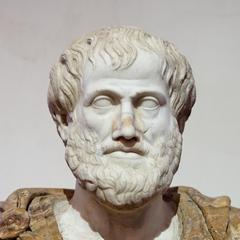
Aristotle
Aristotle

Aristotle, a renowned Greek philosopher, is one of the founders of Western philosophy. His thoughts covered a wide range of fields, including ethics, logic, politics, and had a profound impact on the world. more

You May Also Like

“Laws, when good, should be supreme; and that the magistrate or magistrates should regulate those matters only on which the laws are unable to speak with precision owing to the difficulty of any general principle embracing all particulars.”

“The goodness or badness, justice or injustice, of laws varies of necessity with the constitution of states. This, however, is clear, that the laws must be adapted to the constitutions. But if so, true forms of government will of necessity have just laws, and perverted forms of government will have unjust laws.”

“Now what is just and right is to be interpreted in the sense of 'what is equal'; and that which is right in the sense of being equal is to be considered with reference to the advantage of the state, and the common good of the citizens. And a citizen is one who shares in governing and being governed. He differs under different forms of government, but in the best state he is one who is able and willing to be governed and to govern with a view to the life of virtue.”

“Men agree that justice in the abstract is proportion, but they differ in that some think that if they are equal in any respect they are equal absolutely, others that if they are unequal in any respect they should be unequal in all. The only stable principle of government is equality according to proportion, and for every man to enjoy his own.”

“As to adultery, let it be held disgraceful, in general, for any man or woman to be found in any way unfaithful when they are married, and called husband and wife. If during the time of bearing children anything of the sort occur, let the guilty person be punished with a loss of privileges in proportion to the offense.”

“Some persons hold that, while it is proper for the lawgiver to encourage and exhort men to virtue on moral grounds, in the expectation that those who have had a virtuous moral upbringing will respond, yet he is bound to impose chastisement and penalties on the disobedient and ill-conditioned, and to banish the incorrigible out of the state altogether. For (they argue) although the virtuous man, who guides his life by moral ideals, will be obedient to reason, the base, whose desires are fixed on pleasure, must be chastised by pain, like a beast of burden.”