“The power, indeed, of every individual is small, and the consequence of his endeavours imperceptible, in a general prospect of the world. Providence has given no man ability to do much, that something might be left for every man to do. The business of life is carried on by a general co-operation; in which the part of any single man can be no more distinguished, than the effect of a particular drop when the meadows are floated by a summer shower: yet every drop increases the inundation, and every hand adds to the happiness or misery of mankind.”
Quote by Samuel Johnson
Work
The Works of Samuel Johnson, LL.D.: With An Essay on His Life and Genius
This volume encompasses a wide array of Samuel Johnson's literary works, showcasing his contributions to English literature. It includes his famous dictionary, essays, and other writings, along with an insightful essay that delves into his life and the influence of his genius on the literary world. more
Author
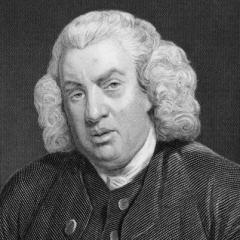
Samuel Johnson
Samuel Johnson was an English writer, poet, and lexicographer, renowned for his comprehensive English dictionary, 'A Dictionary of the English Language', published in 1755. His distinctive writing style and wit have cemented his place as a significant figure in the history of English literature. more
You May Also Like
Source: The works of Samuel Johnson
“The most useful truths are always universal, and unconnected with accidents and customs.”
Source: The beauties of Samuel Johnson: maxims and observations. To which are now added, biographical anecdotes of the doctor, his life [&c.].
Source: The Rambler: A Periodical Paper, Published in 1750, 1751, 1752
Source: Works
Source: The Works of Samuel Johnson, LL.: D., with an Essay on His Life and Genius
Source: Spencer: Political Writings