Quotessence
Home / Quotes / Quote by Charles Babbage

Quote by Charles Babbage

Work

On The Economy Of Machinery And Manufactures

This book delves into the economic aspects of machinery and manufacturing, exploring the technological advancements and their impact on the industrial landscape during the early 19th century. more

Author
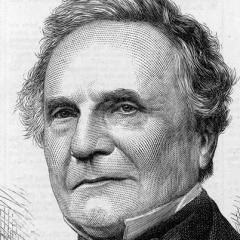
Charles Babbage
Charles Babbage

Charles Babbage, born on December 26, 1791 and died on October 18, 1871, was a renowned British mathematician, inventor, and engineer, often referred to as the 'father of computers'. He made significant contributions in the fields of mathematics, astronomy, and mechanical engineering, and his designs of the Difference Engine and the Analytical Engine laid the foundation for the development of computer science. more

You May Also Like

“Such exceptional suffering and calamity, then, affecting the hero, and-we must now add-generally extending far and wide beyond him, so as to make the whole scene a scene of woe, are an essential ingredient in tragedy and a chief source of the tragic emotions, and especially of pity. But the proportions of this ingredient, and the direction taken by tragic pity, will naturally vary greatly.”

“The calamities of tragedy do not simply happen, nor are they sent; they proceed mainly from actions, and those the actions of men.We see a number of human beings placed in certain circumstances; and we see, arising from the co-operation of their characters in these circumstances, certain actions. These actions beget others, and these others beget others again, until this series of inter-connected deeds leads by an apparently inevitable sequence to a catastrophe.”

“A total reverse of fortune, coming unawares upon a man who 'stood in high degree,' happy and apparently secure,-such was the tragic fact to the mediaeval mind. It appealed strongly to common human sympathy and pity; it startled also another feeling, that of fear. It frightened men and awed them. It made them feel that man is blind and helpless, the plaything of an inscrutable power, called by the name of Fortune or some other name,-a power which appears to smile on him for a little, and then on a sudden strikes him down in his pride.”

“If we are to include the outer and the inner struggle in a conception more definite than that of conflict in general, we must employ some such phrase as 'spiritual force.' This will mean whatever forces act in the human spirit, whether good or evil, whether personal passion or impersonal principle; doubts, desires, scruples, ideas-whatever can animate, shake, possess, and drive a man's soul. [19]In a Shakespearean tragedy some such forces are shown in conflict.”