Quotessence
Home / Quotes / Quote by Alexis de Tocqueville

Quote by Alexis de Tocqueville

“There is hardly a congressman prepared to go home until he has at least one speech printed and sent to his constituents, and he won't let anybody interrupt his harangue until he has made all his useful suggestions about the 24 states of the Union, and especially the district he represents.”

Quote by Alexis de Tocqueville

Author
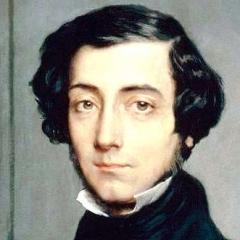
Alexis de Tocqueville

Alexis de Tocqueville was a French historian and political theorist renowned for his seminal work 'Democracy in America'. He embarked on a journey to the United States in the 1830s to examine its democratic institutions, and his observations were compiled into a two-volume book that remains a cornerstone in the study of American democracy and political science. more

You May Also Like

“We, the People of this country, have no unalienable rights... all our rights are subject to modification... the Constitution of the United States of America is nothing more than a piece of paper and... our government should not be restrained by the Constitution because our government can do good things for people.”

“These unwritten amenities have been in part responsible for giving our people the feeling of independence and self-confidence, the feeling of creativity. These amenities have dignified the right of dissent and have honored the right to be nonconformists and the right to defy submissiveness. They have encouraged lives of high spirits rather than hushed, suffocating silence.”

“But our society - unlike most in the world - presupposes that freedom and liberty are in a frame of reference that makes the individual, not government, the keeper of his tastes, beliefs, and ideas. That is the philosophy of the First Amendment; and it is this article of faith that sets us apart from most nations in the world.”

“Forced to choose, the poor, like the rich, love money more than political liberty; and the only political freedom capable of enduring is one that is so pruned as to keep the rich from denuding the poor by ability or subtlety and the poor from robbing the rich by violence or votes.”