“But the greatest error of all the rest is the mistaking or misplacing of the last or farthest end of knowledge: for men have entered into a desire of learning and knowledge, sometimes upon a natural curiosity and inquisitive appetite; sometimes to entertain their minds with variety and delight; sometimes for ornament and reputation; and sometimes to enable them to victory of wit and contradiction; and most times for lucre and profession; and seldom sincerely to give a true account of their gift of reason, to the benefit and use of men.”
Quote by Francis Bacon
Work
The works of Francis Bacon, Baron of Verulam, Viscount St. Alban, and Lord High Chancellor of England, in five volumes
This multi-volume set gathers the principal writings of Francis Bacon, including his philosophical treatises on natural philosophy and scientific method, his celebrated essays on conduct and wisdom, and his historical chronicles of the reigns of British monarchs. Bacon's works represent a significant contribution to early modern English literature and philosophy, reflecting his role as one of the intellectual architects of the Scientific Revolution. The collected edition makes accessible Bacon's prose writings across various genres, from speculative philosophy to political counsel, offering readers a comprehensive view of his literary legacy as a pioneer of empiricist thought and elegant English prose style. more
Author
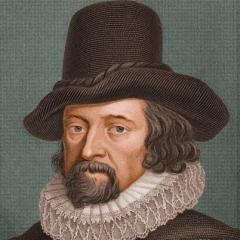
Francis Bacon
Francis Bacon, a renowned philosopher, politician, and writer, served as the Lord Chancellor of England. He is best known for his profound philosophical thoughts and extensive literary works, which have had a lasting impact on the world. more
You May Also Like
Source: The Moral and Political Works of Thomas Hobbes of Malmesbury: Never Before Collected Together : To which is Prefixed, the Author's Life, Extracted from that Said to be Written by Himself, ...
Source: The Rambler
Source: The Intelligent Man's Guide to the Physical Sciences
Source: Selected poetry and prose
Source: Outlines of Astronomy