Quotessence
Home / Quotes / Quote by Marcus Aurelius

Quote by Marcus Aurelius

“For times when you feel pain: See that is doesn't disgrace you, or degrade your intelligence - doesn't keep it from acting rationally or unselfishly.”

Quote by Marcus Aurelius

Work

Meditations

Meditations is a series of personal writings by Marcus Aurelius, Roman Emperor and Stoic philosopher, detailing his thoughts on Stoic practice, self-improvement, and the nature of the universe. more
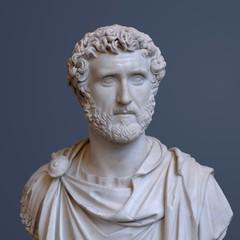
Author

Marcus Aurelius
Marcus Aurelius

Marcus Aurelius, born in 121 AD and died in 180 AD, was an emperor of the Roman Empire. He is one of the Five Good Emperors and is known for his philosophical thoughts and the stability of his reign. He was not only an outstanding politician but also a famous Stoic philosopher, whose work 'Meditations' has had a profound impact on later generations. more

You May Also Like

“Reason and science have always, today and from the very beginning of time, played a secondary and a subordinate part; and so they will to the end of time. People are formed and moved by quite a different force, a force that dominates and exercises its authority over them, the origin of which, however, is unknown and inexplicable. That force is the force of an unquenchable desire to go on to the end and, at the same time, to deny the existence of an end. It is the force of an incessant and persistent affirmation of its existence and a denial of death. It is the spirit of life, as the Scripture says, "rivers of living water", the running dry of which is threatened in Revelation. It is the aesthetic principle, as the philosophers call it, an ethical principle, with which they identify it, the "seeking of God", as I call it much more simply. The purpose of the whole evolution of a nation, in every people and at every period of its existence, is solely the pursuit of God, their God, their very own God, and faith in Him as in the only true one. God is the synthetic personality of the whole people, taken from its beginning to its end. There has never yet been a nation without a religion, that is to say, without the conception of good and evil. Every people has its own conception of good and evil and its own good and evil. When the conceptions of good and evil become general among many nations, then these nations begin to die out, and the very distinction between good and evil begins to get blurred and to vanish.”

“These Christians always seemed to consider long-term holistic wellbeing. None of their answers were easy or quick but took grit and determination. Every “do” and “don’t” had a reason and purpose behind it. I was finally beginning to understand the why behind things.”

“In similar fashion, Bellarmine's decree of 1616, banning the teaching of Copernicanism, looks like a calculated political move, designed to secure the interests of the church. Part of the traditional idea of an opposition between the "rational scientist" and the "prejudiced opponents of science" is best captured by noting that some people do not give the highest priority to impersonal cognitive goals but to certain practical ends (sometimes personal, sometimes impersonal) and that their actions are well designed for achieving these ends.”