“The search for better, for more competent men, from the presidents of our great companies down to our household servants, was never more vigorous than it is now. And more than ever before is the demand for competent men in excess of the supply. What we are all looking for, however, is the readymade, competent man; the man whom some one else has trained. It is only when we fully realize that our duty, as well as our opportunity, lies in systematically cooperating to train and to make this competent man, instead of in hunting for a man whom some one else has trained, that we shall be on the road to national efficiency. In the past the prevailing idea has been well expressed in the saying that “Captains of industry are born, not made”; and the theory has been that if one could get the right man, methods could be safely left to him. In the future it will be appreciated that our leaders must be trained right as well as born right, and that no great man can (with the old system of personal management) hope to compete with a number of ordinary men who have been properly organized so as efficiently to cooperate. In the past the man has been first; in the future the system must be first. This in no sense, however, implies that great men are not needed. On the contrary, the first object of any good system must be that of developing first-class men; and under systematic management the best man rises to the top more certainly and more rapidly than ever before.”
Quote by Frederick Winslow Taylor
Work
This book introduces the principles of scientific management, emphasizing the systematic study of work processes and the application of time and motion studies to optimize efficiency. It discusses the importance of standardization, division of labor, and coordination in achieving organizational goals. more
Author
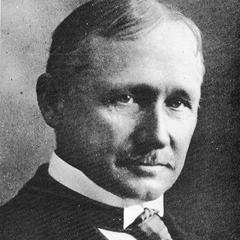
Frederick Winslow Taylor, born on March 20, 1856, and died on March 21, 1915, was an American mechanical engineer and the founder of scientific management theory. He is known for his research on workflow and his contributions to the improvement of industrial production efficiency. more
You May Also Like
“We always have a choice as to, not what we hear, but what we listen to.”
“El amor no es un sentimiento, el amor es sensibilidad.”
“I have no reason whatsoever to dislike or hate someone who is not the cause of my challenges.”