“If he had but a little more brains, she thought to herself, I might make something of him; but she never let him perceive the opinion she had of him; listened with indefatigable complacency to his stories of the stable and the mess; laughed at all his jokes...When he came home, she was alert and happy; when he went out she pressed him to go; when he stayed at home, she played and sang for him, made him good drinks, superintended his dinner, warmed his slippers, and steeped his soul in comfort. The best of women {I have heard my grandmother say) are hypocrites. We don't know how much they hide from us: how watchful they are when they seem most artless and confidential: how often those frank smile which they wear so easily are traps to cajole or elude or disarm--I don't mean in your mere coquettes, but your domestic models and paragons of female virute.”
Quote by William Makepeace Thackeray
Work
Vanity Fair is a satirical novel by William Makepeace Thackeray, published in serial form between 1847 and 1848. The story is set against the backdrop of the Napoleonic Wars and explores themes of ambition, social status, and the pursuit of wealth and power. The novel features a complex web of characters and is known for its wit and social commentary. more
Author
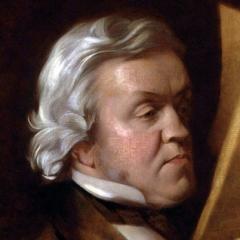
William Makepeace Thackeray was a prominent British novelist of the Victorian era, born on July 18, 1811, in India, and died on December 24, 1863. He is known for his satirical and humorous writing style and is considered one of the greatest novelists of the 19th century. His most famous work, 'Vanity Fair', is regarded as a classic of English literature. more
You May Also Like
“My Wife, I get to keep you forever. ~Lucian Bane~”
“Married life is not for the faint hearted. Sometimes it can look like an ugly battlefield”
“Sometimes divorce is the best thing that can happen to marriage”
“A man should not compete with his wife in talk but in silence”