Quotessence
Home / Quotes / Quote by Frances Hodgson Burnett

Quote by Frances Hodgson Burnett

Work

The Secret Garden

This novel, known for its evocative imagery and emotional depth, follows the journey of a young orphan girl who discovers a neglected garden in her new home. Through her efforts to restore the garden, she learns about the power of nature and the importance of nurturing one's inner and outer landscapes. more
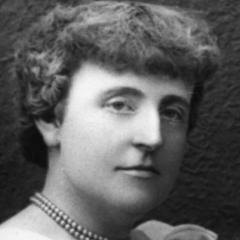
Author

Frances Hodgson Burnett

Frances Hodgson Burnett was an English playwright known for her rich imagination and delicate emotional descriptions. Her works spanned various genres including drama, novels, and poetry, with her most famous works being 'Little Women' and 'The Secret Garden'. Born on November 24, 1849, she passed away on October 29, 1924. more

You May Also Like

“The port teemed with children. Helen had been rushing, the will carefully tucked in the crook of her arm, when she turned the corner and the sight of their little faces stopped her in her tracks. They were a ragged little crowd, their hair in disarray from the night spent sleeping on their siblings’ shoulders, but Helen thought they were beautiful. Notes pinned to their coats declared their names, and every hand held something, whether an adult-sized suitcase or the grip of a sibling. It was the brothers and sisters who broke Helen’s heart the most. For all the bickering they likely once did, they now clung to each other as a soul does to a body. Don’t separate us, their small faces begged, necks craned to look up at the clusters of adults watching them. Wherever we must go, just let it be together.”

“To be critical of pronatalism is not equivalent to condemning parenthood; it is to shed light on its prescriptive nature and propose that it would be socially and ecologically desirable that parenthood cease to be considered as a natural instinct and/or a religious or a social duty. The ‘biological clock’ that some women claim to hear ticking is also a ‘social clock’ reminding them that whatever else may be going on in their lives, motherhood is their destiny, the road to social acceptance and integration. It is because parenthood is not a natural instinct, but socially and prescriptively imposed, that many people unsuited for family formation bear or adopt children; domestic violence and child abuse result from the often deadly interaction between sexual inequality and pronatalism. Today, pronatalist ideologies and social pressures continue to curtail women’s opportunities and ability to shape their future, and place them in a disadvantaged position relative to men, thus sustaining the inequality between men and women despite considerable gains in sexual liberation, civil rights, and economic opportunities for women.”