Quotessence
Home / Quotes / Quote by George Herbert

Quote by George Herbert

Work

The Complete Works of George Herbert: Prose

This volume includes a selection of George Herbert's prose works, showcasing his diverse range of writing styles and themes. more

Author
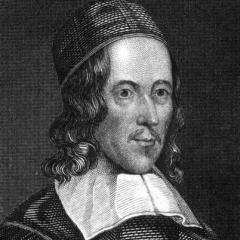
George Herbert
George Herbert

George Herbert, a renowned English poet, was born on April 3, 1593, and died on March 1, 1633. Known for his religious poetry, Herbert's works blend personal faith with profound philosophy, exerting a profound influence on poetry in the postmodern era. more

You May Also Like

“In part of Lord Kames' Elements of Criticism, he says that "music improves the relish of a banquet." That I deny,--any more than painting might do. They may both be additional pleasures, as well as conversation is, but are perfectly distinct notices; and cannot, with the least propriety, be said to mix or blend with the repast, as none of them serve to raise the flavor of the wine, the sauce, the meat, or help to quicken appetite. But music and painting both add a spirit to devotion, and elevate the ardor.”

“Is it not an amazing thing, that men shall attempt to investigate the mystery of the redemption, when, at the same time that it is propounded to us as an article of faith solely, we are told that "the very angels have desired to pry into it in vain"?”

“Upon the present theological computation, ten souls must be lost for one that is saved. At which rate of reckoning, heaven can raise but its cohorts while hell commands its legions. From which sad account it would appear, that, though our Saviour had conquered death by the resurrection, he had not yet been able to overcome sin by the redemption.”

“Probably Providence has implanted peevishness and ill-temper in sick and old persons, in compassion to the friends or relations who are to survive; as it must naturally lessen the concern they might otherwise feel for their loss.”

“I was acquainted once with a gallant soldier who assured me that his only measure of courage was this: upon the first fire, in an engagement, he immediately looked upon himself as a dead man. He then bravely fought out the remainder of the day, perfectly regardless of all manner of danger, as becomes a dead man to be. So that all the life or limbs he carried back again to his tent he reckoned as clear gains, or, as he himself expressed it, so much out of the fire.”

“There are some tempers--how shall I describe them--formed either of such impenetrable matter, or wrought up by habitual selfishness to such an utter insensibility of what becomes of the fortunes of their fellow-creatures, as if they were not partakers of the same nature, or had no lot or connection at all with the species.”

“Sight is by much the noblest of the senses. We receive our notices from the other four, through the organs of sensation only. We hear, we feel, we smell, we taste, by touch. But sight rises infinitely higher. It is refined above matter, and equals the faculty of spirit.”