Quotessence
Home / Quotes / Quote by Lawrence Wright

Quote by Lawrence Wright

“When I'm writing about complicated subjects, it usually involves a world. It could be the world of Scientology or the world of Al Qaeda, or the world of counter-terrorism.I look for emblematic beasts of burden - what I call "donkeys" - who can carry the reader through this world. They serve a different purpose. Donkeys are not especially interesting or likeable, but they are serviceable. They will take you into this world. The distinction I'm trying to make is: It's not about them. It's about the world.”

Quote by Lawrence Wright

Author
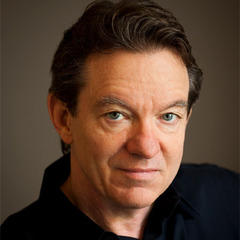
Lawrence Wright
Lawrence Wright

Lawrence Wright is an American author known for his in-depth reporting on terrorism and modern politics. His work 'The Looming Tower' on the rise of al-Qaeda and the 9/11 attacks won the Pulitzer Prize. more

You May Also Like

“In my couple of books, including Going Clear, the book about Scientology, I thought it seemed appropriate at the end of the book to help the reader frame things. Because we've gone through the history, and there's likely conflictual feelings in the reader's mind. The reader may not agree with me, but I don't try to influence the reader's judgment. I know everybody who picks this book up already has a decided opinion. But my goal is to open the reader's mind a little bit to alternative narratives.”

“It's the hardening of these narratives that makes peace so difficult. If each side can see the narrative, the claims that the other has, then there is a much more likely possibility of making a resolution. But what I see is the opposite. There is a total disclaiming of the validity of the other side, and talk that I find really unsettling, the kind of chatter you get from ultra-right Israelis and Hamas is of annihilation. In that kind of dialogue, there's no way to move toward peace.”

“Let me see: art and activism. I can always fall back on, "the question should be, what isn't political? Everything you do is political, even if it's abstract. You're making a political statement even if it's unwittingly." I think so much of art is unconscious anyway, the artist doesn't know the real reason they're doing it. They're just kind of going along with it intuitively.”

“The unusual thing about doing street poster art - or something with a conscious social critique in it - is that the artist thinks they're a little in control, focusing and trying to make a specific point. But even then, when you look at it a few years later, you realize you were just working through some of the usual feelings you were going through during that time.”

“Art makes people do a double take and then, if they're looking at the picture, maybe they'll read the text under it that says, "Come to Union Square, For Anti-War Meeting Friday." I've been operating that way ever since - that art is a means to an end rather than simply an end in itself. In art school we're always taught that art is an end in itself - art for art's sake, expressing yourself, and that that's enough.”

“What's that Regina Spektor song? Museums are like mausoleums. Having your work in a museum is something we as artists aspire to, but I don't think that's something we need to worry about while we're alive. Typically your work will end up in a museum after you're dead. And maybe that's the function of a museum. It's an archive of your work after you're dead. But while we're alive, I like to see it in places where it's connected to day-to-day life and making a difference.”