“...it is the greatest achievement of a teacher to enable his students to surpass him.”
Quote by John G. Kemeny
Work
Random Essays on Mathematics, Education, and Computers
Random Essays on Mathematics, Education, and Computers is a compilation of thought-provoking essays that delve into the realms of mathematics, education, and computer science. The essays provide a comprehensive look at the theoretical foundations and practical applications of these disciplines, offering readers a nuanced understanding of their interconnections. more
Author
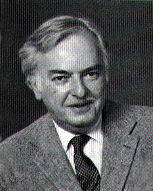
John G. Kemeny
John G. Kemeny was a renowned mathematician, born on May 31, 1926, and passed away on December 26, 1992. He made significant contributions to the fields of computer science and mathematics education. more
You May Also Like
Source: Mathematics in Western Culture
“Mathematics is no more computation than typing is literature.”
“Mathematics is the abstract key which turns the lock of the physical universe.”
Source: One World: The Interaction of Science and Theology
Source: Mind Tools: The Five Levels of Mathematical Reality
Source: Carl Sandburg
Source: Prelude to Mathematics
“Calculus is the most powerful weapon of thought yet devised by the wit of man.”