Quotessence
Home / Quotes / Quote by Fidel Castro

Quote by Fidel Castro

Work

Fidel Castro: My Life: A Spoken Autobiography

This book presents the first-hand account of Fidel Castro's life, offering a unique perspective on his rise to power, leadership of Cuba, and the impact of his policies on the island nation and the world. more

Author
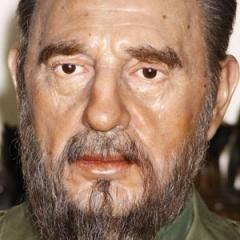
Fidel Castro
Fidel Castro

Fidel Castro, born on August 13, 1926, and died on November 25, 2016, was a former Prime Minister of Cuba. He was a key figure in the Cuban Revolution, leading the successful overthrow of Fulgencio Batista's regime in 1959 and establishing the Republic of Cuba. Castro's political career and leadership style had a profound impact on Cuba and the Latin American region. more

You May Also Like

“Despite current ads and slogans, the world doesn't change one person at a time. It changes when networks of relationships form among people who share a common cause and vision of what's possible. This is good news for those of us intent on creating a positive future. Rather than worry about critical mass, our work is to foster critical connections. We don't need to convince large numbers of people to change; instead, we need to connect with kindred spirits. Through these relationships, we will develop the new knowledge, practices, courage and commitment that lead to broad-based change.”

“The nearer people approach old age the closer they return to a semblance of childhood, until the time comes for them to depart this life, again like children, neither tired of living nor aware of death.”

“I travel because I like to move from place to place, I enjoy the sense of freedom it gives me, it pleases me to be rid of ties, responsibilities, duties, I like the unknown; I meet odd people who amuse me for a moment and sometimes suggest a theme for a composition; I am often tired of myself and I have a notion that by travel I can add to my personality and so change myself a little. I do not bring back from the journey quite the same self that I took”

“If war can indeed be turned into a relic, then the virtue of greed will recede further. From a given society's standpoint, one big upside of wanton material acquisition has traditionally been the way it drives technological progress-which, after all, helps keep societies strong. In the nineteenth century, Russia ans Germany had little choice about modernizing; in those days stasis invited conquest. But if societies no longer face conquest, breakneck technological advance is an offer they can refuse, and frugality a luxury people can afford.”

“When we hide from the world in this way, we feel secure. We may think we have quieted our fear, but we are actually making ourselves numb with fear. We surround ourselves with our own familiar thoughts, so that nothing sharp or painful can touch us.”

“When we are constantly recreating our basic patterns of behavior and thought, we never have to leap into fresh air or onto fresh grass. Instead, we wrap ourselves in our own dark environment, where our only companion is the smell of our own sweat. In the cocoon, there is no dance, no walking or breathing. It is comfortable and sleepy, an intense and very familiar home.”

“In the cocoon, there is no idea of light at all, until we experience some longing for openness, some longing for something other than the smell of our own sweat. When we examine that comfortable darkness - look at it, smell it, feel it - we find it is claustrophobic.”

“Then, we realize that the degraded cocoon we have been hiding in is revolting, and we want to turn up the lights as far as we can. In fact, we are not turning up the lights, but we are simply opening our eyes wider. We catch a certain kind of fever.”