“Great inventions are never, and great discoveries are seldom, the work of any one mind. Every great invention is really an aggregation of minor inventions, or the final step of a progression. It is not usually a creation, but a growth, as truly so as is the growth of the trees in the forest.” MindScienceGrowthStepsTreeCreationGreatnessHard WorkDiscoveryFinalsInventionForestsMinorsProgressionGreat Inventions Author:Robert Henry Thurston
“He who works with the door open gets all kinds of interruptions, but he also occasionally gets clues as to what the world is and what might be important.” WorldKindImportantMightScienceDoorsHard WorkAll KindsClueInterruptionsGet A Clue Author:Richard Hamming
“I am an experimenter, or rather I used to be one. Then I stopped working, and since then people think I am a theoretician.” PeopleThinkingScienceUsedHard WorkExperimentsUsed To Be Author:George Placzek
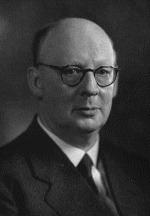
“I believe scientists have a duty to share the excitement and pleasure of their work with the general public, and I enjoy the challenge of presenting difficult ideas in an understandable way.” WayBelieveIdeasScienceBeliefI BelieveEnjoyDifficultUnderstandingChallengesPleasureShareDutyHard WorkScientistExcitementPresentingGeneral Public Author:Antony Hewish
“If a mathematician wishes to disparage the work of one of his colleagues, say, A, the most effective method he finds for doing this is to ask where the results can be applied. The hard pressed man, with his back against the wall, finally unearths the researches of another mathematician B as the locus of the application of his own results. If next B is plagued with a similar question, he will refer to another mathematician C. After a few steps of this kind we find ourselves referred back to the researches of A, and in this way the chain closes.” IfsMenWayKindHardScienceNextAsksWishResultsStepsHard WorkWallResearchMethodChainsApplicationMathematicianColleaguesBack Against The Wall Author:Alfred Tarski
“If the double helix was so important, how come you didn't work on It? Ther husband, Linus Pauling, when the Nobel Prize was awarded to Crick, Watson and Wilkins.” IfsImportantScienceHard WorkHusbandImportancePrizeNobelNobel PrizeWatson Author:Ava Helen Pauling
“If you don't work on important problems, it's not likely that you'll do important work.” IfsImportantProblemHard WorkImportant Work Author:Richard Hamming
“In 1945 J.A. Ratcliffe ... suggested that I [join his group at Cavendish Laboratory, Cambridge] to start an investigation of the radio emission from the Sun, which had recently been discovered accidentally with radar equipment. ... [B]oth Ratcliffe and Sir Lawrence Bragg, then Cavendish Professor, gave enormous support and encouragement to me. Bragg's own work on X-ray crystallography involved techniques very similar to those we were developing for "aperture synthesis", and he always showed a delighted interest in the way our work progressed.” WayScienceInterestSupportSunGroupsHard WorkInvolvedDiscoveryEncouragementRadioTechniqueEnormousDevelopingProfessorsRaysInvestigationEquipmentLaboratoryDelightedEmissionsRadarSynthesisCambridgeSupport And EncouragementAperture Author:Martin Ryle
“In such sad circumstances I but see myself exalted by my own enemies, for in order to defeat some small works of mine they try to make the whole rational medicine and anatomy fall, as if I were myself these noble disciplines.” IfsTryingWholeOrderFallMy OwnEnemySadnessMinesHard WorkDisciplineCircumstancesMedicineDefeatNobleRationalSelf DisciplineExaltedAnatomy Author:Marcello Malpighi
“In the discovery of lemmas the best aid is a mental aptitude for it. For we may see many who are quick at solutions and yet do not work by method ; thus Cratistus in our time was able to obtain the required result from first principles, and those the fewest possible, but it was his natural gift which helped him to the discovery.” FirstsMayAbleScienceNaturalAbilityResultsPrinciplesHard WorkSolutionsDiscoveryMethodAidsOur TimeAptitudeNatural Gifts Author:Proclus