Quotessence
Home / Quotes / Quote by Edith Wharton

Quote by Edith Wharton

Work

Madame de Treymes: American Literature

Madame de Treymes is a romantic novel that explores themes of love, loyalty, and social class in the context of the American South in the early 20th century. more

Author
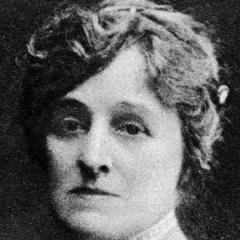
Edith Wharton
Edith Wharton

American novelist known for her delicate psychological portrayals and profound social insights. Edith Wharton came from a wealthy New York family and her works mainly reflect the American society at the end of the 19th century and the beginning of the 20th century. Her representative works include 'The Age of Innocence' and 'The House of Mirth' among others. more

You May Also Like

“The universe danced towards life. Life was a remarkably common commodity. Anything sufficiently complicated seemed to get cut in for some, in the same way that anything massive enough got a generous helping of gravity. The universe had a definite tendency towards awareness. This suggested a certain subtle cruelty woven into the very fabric of space-time.”

“Washington was a typical American. Napoleon was a typical Frenchman, but Lincoln was a humanitarian as broad as the world. He was bigger than his country - bigger than all the Presidents together. We are still too near to his greatness,' (Leo) Tolstoy (in 1908) concluded, 'but after a few centuries more our posterity will find him considerably bigger than we do. His genius is still too strong and powerful for the common understanding, just as the sun is too hot when its light beams directly on us.' (748)”

“In my own worst seasons I've come back from the colorless world of despair by forcing myself to look hard, for a long time, at a single glorious thing: a flame of red geranium outside my bedroom window. And then another: my daughter in a yellow dress. And another: the perfect outline of a full, dark sphere behind the crescent moon. Until I learned to be in love with my life again. Like a stroke victim retraining new parts of the brain to grasp lost skills, I have taught myself joy, over and over again(15).”

“I'm tired of my life, my clothes, the things I say. I'm hacking away at the surface, as at some kind of gray ice, trying to break through to what is underneath or I am dead. I can feel the surface trembling—it seems ready to give but it never does. I am uninterested in current events. How can I justify this? How can I explain it? I don't want to have the same vocabulary I've always had. I want something richer, broader, more penetrating and powerful.”