Quotessence
Home / Quotes / Quote by Marcus Vitruvius Pollio

Quote by Marcus Vitruvius Pollio

Author
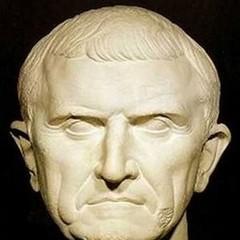
Marcus Vitruvius Pollio

Marcus Vitruvius Pollio, a renowned Roman architect, engineer, and writer, lived from 81 BC to 15 AD. He is considered one of the founders of Roman architecture and is best known for his work 'De Architectura', which has had a profound impact on the development of architecture throughout history. more

You May Also Like

“Remembering that Eratosthenes of Cyrene, employing mathematical theories and geometrical methods, discovered from the course of the sun, the shadows cast by an equinoctial gnomon, and the inclination of the heaven that the circumference of the earth is two hundred and fifty-two thousand stadia, that is, thirty-one million five hundred thousand paces.”

“There are two styles of walls "opus reticulatum," now used by everybody and the ancient style called "opus incertum." Of these, the reticulatum looks better, but its construction makes it likely to crack. On the other hand, in the opus incertum, the rubble lying in courses and imbricated, makes a wall which though not beautiful, is stronger.”

“Leave a cavity behind the [wall] facings, and on the inside build walls two feet thick, made of red dimension stone or burnt brick or lava in courses, and then bind them to the fronts by means of iron clamps and lead. The beds and builds, all settling equally and bonded at the joints, will not let the work bulge out, nor allow the fall of the face walls which have been tightly fastened together.”

“Fir : it contains a great deal of air and fire with very little moisture and the earthy, so that, as its natural properties are of the lighter class, it is not heavy. Hence, its consistence being naturally stiff, it does not easily bend under the load, and keeps its straightness when used in the framework. But it contains so much heat that it generates and encourages decay, which spoils it; and it also kindles fire quickly because of the air in its body, which is so open that it takes in fire and so gives out a great flame.”

“Apollo at Delphi, through the oracular utterance of his priestess, pronounced Socrates the wisest of men. Of him it is related that he said with sagacity and great learning that the human breast should have been furnished with open windows, so that men might not keep their feelings concealed, but have them open to the view. Oh that nature, following his idea, had constructed them thus unfolded and obvious to the view.”