“Owing to the position which “the science of kalām” acquired in Islam, the status of philosophy in Islam was intermediate between its status in Christianity and in Judaism. To turn therefore to the status of philosophy within Judaism, it is obvious that while no one can be learned in the sacred doctrine of Christianity without having had considerable philosophic training, one can be a perfectly competent talmudist without having had any philosophic training. Jews of the philosophic competence of Halevi and Maimonides took it for granted that being a Jew and being a philosopher are mutually exclusive. At first glance, Maimonides’ Guide for the Perplexed is the Jewish counterpart of Thomas Aquinas’ Summa Theologica; but the Guide never acquired within Judaism even a part of the authority which the Summa enjoyed within Christianity; not Maimonides’ Guide, but his Mishnah Torah, i.e., his codification of Jewish law, could be described as the Jewish counterpart to the Summa. Nothing is more revealing than the difference between the beginnings of the Guide and the Summa. The first article of the Summa deals with the question as to whether the sacred doctrine is required besides the philosophic disciplines: Thomas as it were justifies the sacred doctrine before the tribunal of philosophy. One cannot even imagine Maimonides opening the Guide, or any other work, with a discussion of the question as to whether the Halakha (the sacred Law) is required besides the philosophic disciplines.”
Quote by Leo Strauss
Work
Persecution and the Art of Writing
This book delves into the ways in which writers have been influenced by persecution, examining how it has shaped their work and contributed to the development of various literary forms and styles. more
Author
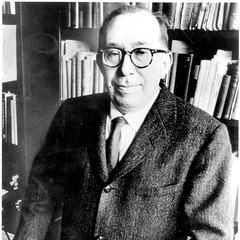
Leo Strauss
Leo Strauss was a prominent philosopher born on September 20, 1899, and died on October 18, 1973. His thoughts were deeply influenced by classical philosophy and German philosophy, especially by Martin Heidegger's philosophical ideas. Strauss's main contribution lies in his reinterpretation of political philosophy, emphasizing the close connection between political philosophy and moral philosophy. more
You May Also Like
Source: A Writer's Year: Fennel's Journal No. 3
“DSM er imidlertid et konsensusdokument, og dets diagnoser er uvidenskabelige og vilkårlige.”
Source: Deadly Psychiatry and Organised Denial
Source: Elastic: Flexible Thinking in a Time of Change
Source: Unapologetically You: Reflections on Life and the Human Experience