Quotessence
Home / Quotes / Quote by Charles Dickens

Quote by Charles Dickens

Work

Master Humphrey's Clock

Master Humphrey's Clock is a collection of short stories by Charles Dickens, published in 1840. The stories are compiled and introduced by the fictional character Master Humphrey, who serves as a narrator and moral guide. The collection includes various genres, such as mystery, romance, and social commentary, reflecting Dickens' characteristic exploration of human nature and societal issues. more

Author
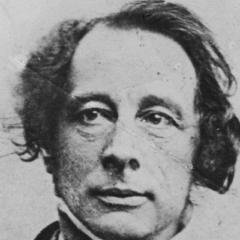
Charles Dickens
Charles Dickens

Charles Dickens, a British writer born on February 7, 1812, and died on June 9, 1870, is one of the greatest novelists of the 19th century. Known for his profound social criticism and vivid narrative style, Dickens' works extensively cover social reality, revealing various issues in the British society of the time. more

You May Also Like

“He lowered the window, and looked out at the rising sun. There was a ridge of ploughed land, with a plough upon it where it had been left last night when the horses were unyoked; beyond, a quiet coppice-wood, in which many leaves of burning red and golden yellow still remained upon the trees. Though the earth was cold and wet, the sky was clear, and the sun rose bright, placid, and beautiful.”

“The bright, frosty day declined as they walked and spoke together. The sun dipped in the river far behind them, and the old city lay red before them, as their walk drew to a close. The moaning water cast its seaweed duskily at their feet, when they turned to leave its margin; and the rooks hovered above them with hoarse cries, darker splashes in the darkening air.”

“Not only is the day waning, but the year. The low sun is fiery and yet cold behind the monastery ruin, and the Virginia creeper on the Cathedral wall has showered half its deep-red leaves down on the pavement. There has been rain this afternoon, and a wintry shudder goes among the little pools on the cracked, uneven flag-stones, and through the giant elm-trees as they shed a gust of tears.”

“The white face of the winter day came sluggishly on, veiled in a frosty mist; and the shadowy ships in the river slowly changed to black substances; and the sun, blood-red on the eastern marshes behind dark masts and yards, seemed filled with the ruins of a forest it had set on fire.”

“But, for all that, they had a very pleasant walk. The trees were bare of leaves, and the river was bare of water-lilies; but the sky was not bare of its beautiful blue, and the water reflected it, and a delicious wind ran with the stream, touching the surface crisply.”

“"But even if he has been wicked," pursued Rose, "think how young he is; think that he may never have known a mother's love, or the comfort of a home; that ill-usage and blows, or the want of bread, may have driven him to herd with men who have forced him to guilt. Aunt, dear aunt, for mercy's sake, think of this, before you let them drag this sick child to a prison, which in any case must be the grave of all his chances of amendment."”

“A moment, and its glory was no more. The sun went down beneath the long dark lines of hill and cloud which piled up in the west an airy city, wall heaped on wall, and battlement on battlement; the light was all withdrawn; the shining church turned cold and dark; the stream forgot to smile; the birds were silent; and the gloom of winter dwelt on everything.”

“The evening wind made such a disturbance just now, among some tall old elm-trees at the bottom of the garden, that neither my mother nor Miss Betsey could forbear glancing that way. As the elms bent to one another, like giants who were whispering secrets, and after a few seconds of such repose, fell into a violent flurry, tossing their wild arms about, as if their late confidences were really too wicked for their peace of mind.”