Quotessence
Home / Quotes / Quote by Edward Bulwer-Lytton, 1st Baron Lytton

Quote by Edward Bulwer-Lytton, 1st Baron Lytton

Author
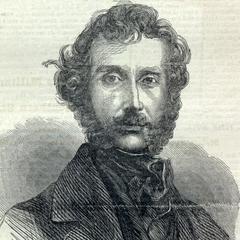
Edward Bulwer-Lytton, 1st Baron Lytton

British novelist known for his historical novels and Gothic tales, famous for works such as 'Peveril of the Peak' and 'Evelyn Hope'. more

You May Also Like

“I think, however, that there isn't any solution to this problem of education other than to realize that the best teaching can be done only when there is a direct individual relationship between a student and a good teacher - a situation in which the student discusses the ideas, thinks about the things, and talks about the things. It's impossible to learn very much by simply sitting in a lecture, or even by simply doing problems that are assigned. But in our modern times we have so many students to teach that we have to try to find some substitute for the ideal.”

“No individual and no generation has had enough personal experience to ignore the vast experience of the human race that is called history. Yet most of our schools and colleges today pay little attention to history. And many of our current policies repeat mistakes that were made, time and again, in the past with disastrous results.”

“What is necessary for 'the very existence of science,' and what the characteristics of nature are, are not to be determined by pompous preconditions, they are determined always by the material with which we work, by nature herself. We look, and we see what we find, and we cannot say ahead of time successfully what it is going to look like. ... It is necessary for the very existence of science that minds exist which do not allow that nature must satisfy some preconceived conditions.”

“The principle of science, the definition, almost, is the following: The test of all knowledge is experiment. Experiment is the sole judge of scientific "truth." But what is the source of knowledge? Where do the laws that are to be tested come from? Experiment, itself, helps to produce these laws, in the sense that it gives us hints. But also needed is imagination to create from these hints the great generalizations--to guess at the wonderful, simple, but very strange patterns beneath them all, and then to experiment to check again whether we have made the right guess.”

“One may ask the question as to the extent to which the quest for beauty is an aim in the pursuit of science. . . . It is, indeed, an incredible fact that what the human mind, at its deepest and most profound, perceives as beautiful finds its realization in external nature. What is intelligible is also beautiful.”