Quotessence
Home / Quotes / Quote by Charles Caleb Colton

Quote by Charles Caleb Colton

“In science, reason is the guide; in poetry, taste. The object of the one is truth, which is uniform and indivisible; the object of the other is beauty, which is multiform and varied.”

Quote by Charles Caleb Colton

Author
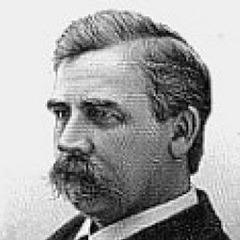
Charles Caleb Colton

Charles Caleb Colton was an English writer active from 1780 to 1832. Known for his humor and wit, he is particularly recognized for his aphorisms and satirical works. more

You May Also Like

“Mathematics is much more than a language for dealing with the physical world. It is a source of models and abstractions which will enable us to obtain amazing new insights into the way in which nature operates. Indeed, the beauty and elegance of the physical laws themselves are only apparent when expressed in the appropriate mathematical framework.”

“Mathematics, rightly viewed, possesses not only truth, but supreme beauty a beauty cold and austere, like that of sculpture, without appeal to any part of our weaker nature, without the georgeous trappings of painting or music, yet sublimely pure, and capable of a stern perfection such as only the greatest art can show. The true spirit of delight, the exaltation, the sense of being more than Man, which is the touchstone of the highest excellence, is to be found in mathematics as surely as in poetry.”

“Nature is painting for us, day after day, pictures of infinite beauty.”

“No occupation is more worthy of an intelligent and enlightened mind, than the study of Nature and natural objects; and whether we labour to investigate the structure and function of the human system, whether we direct our attention to the classification and habits of the animal kingdom, or prosecute our researches in the more pleasing and varied field of vegetable life, we shall constantly find some new object to attract our attention, some fresh beauties to excite our imagination, and some previously undiscovered source of gratification and delight.”

“Of possible quadruple algebras the one that had seemed to him by far the most beautiful and remarkable was practically identical with quaternions, and that he thought it most interesting that a calculus which so strongly appealed to the human mind by its intrinsic beauty and symmetry should prove to be especially adapted to the study of natural phenomena. The mind of man and that of Nature's God must work in the same channels.”