Quotessence
Home / Quotes / Quote by Patricia Hill Collins

Quote by Patricia Hill Collins

Work

Black Feminist Thought: Knowledge, Consciousness, and the Politics of Empowerment

This book delves into the intellectual and political landscape of black feminism, examining its concepts of knowledge and consciousness as they relate to the empowerment of black women. more

Author
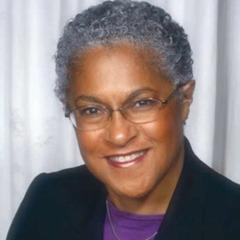
Patricia Hill Collins

Patricia Hill Collins is an esteemed American sociologist known for her contributions to the theory of intersectionality, focusing on how race, class, and gender intersect to shape social structures and individual experiences. more

You May Also Like

“Oppressed groups are frequently placed in the situation of being listened to only if we frame our ideas in the language that is familiar to and comfortable for a dominant group. This requirement often changes the meaning of our ideas and works to elevate the ideas of dominant groups.”

“The potential significance of Black feminist thought goes far beyond demonstrating that African-American women can be theorists. Like Black feminist practice, which it reflects and which it seeks to foster, Black feminist thought can create a collective identity among African-American women about the dimensions of a Black women's standpoint. Through the process of rearticulating, Black feminist thought can offer African-American women a different view of ourselves and our worlds”

“The land on which they (the Founding Fathers) formed this Union was stolen. The hands with which they built this nation were enslaved. The women who birthed the citizens of the nation are second class. This is the imperfect fabric of our nation, at times we’ve torn and stained it, and at other moments, we mend and repair it. But it’s ours, all of it. The imperialism, the genocide, the slavery, also the liberation and the hope and the deeply American belief that our best days still lie ahead of us.”

“We have never invested as much in public education as we should have because we've always had a private notion of children. Your kid is yours and totally your responsibility. We haven't had a very collective notion of these are our children. So part of it is we have to break through our kind of private idea that kids belong to their parents or kids belong to their families and recognize that kids belong to whole communities.”