Quotessence
Home / Quotes / Quote by Tina Howe

Quote by Tina Howe

“The tools I handle are words. They may be unappreciated or misunderstood, but they tell us who we are.”

Quote by Tina Howe

Author
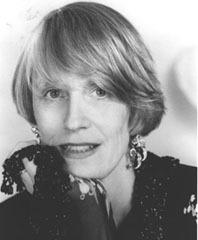
Tina Howe
Tina Howe

Tina Howe, born on November 21, 1937, is an accomplished American playwright. Known for her unique sense of humor and profound thematic explorations, her works often delve into themes of family, friendship, and identity. Howe's plays have been nominated for multiple Tony Awards and have been adapted into films. more

You May Also Like

“. . . it is true that language and forward movement in the cinema are jolly hard to reconcile. It's a very, very, difficult thing to do. . . . There is still a place in the cinema for movies that are driven by the human face, and not by explosions and cars and guns and action sequences . . . there's such a thing as action and speed within thought rather than within a ceaseless milkshake of images.”

“GOOD AS NEW was born out of the idea of writing a play where the stakes were high and the collisions were of a verbal nature. Also I wanted to write a play where people were smarter than I was, and more alive than I feel normally. I became interested in the idea of characters who would surprise me. I guess one could argue that nothing comes out of you that wasn't within you to begin with, but maybe there are ways to trick yourself into becoming more an observer or an advocate for the characters.”

“. . . I do think that deep down, a lot of my work is about people trying to make reasonable accommodations of situations that are insane or absurd. . . . At first I thought the events had power in themselves, that I would just present them. I really wasn't aware of the things that finally became central issues to me - the shifting alliances, the way people hardly even know they've shifted. That part of [A QUESTION OF MERCY] is very familiar to me in terms of my other plays.”

“I don't have an idea for a play until after I've finished writing it. I write first, and come up with what it's about later. My technique could be compared to having a large canvas and coming in every day and putting a dot on it somewhere, and after several years - literally - I begin to say, That reminds me of an elephant, so I think I'll make it one.”

“[I was] particularly eager to give voice to the women of my mother's place and generation, who grew up in turn-of-the-century, privileged New England households, who really never had a chance to flower and assess themselves and find out who they were. More than anything, I wanted to give voice to the sort of anger that women of that generation could never express for themselves.”

“I do think the challenge, in a way for me, is to write a narrative film and when you finish watching it you feel like it's a collage. You tell the narrative, you tell the story, but you feel like you've created this tapestry. But it also has a shape, a story. So I think there's a middle ground that I try to strike... away from where everyone else seems ready to go, which is, setup, payoff. You know, He's afraid of water, oh, and at the end he's swimming in water - oh, my God. I hate that stuff.”

“I love to play with language; make it do tricks, turn a word inside out to see if it's got a hidden meaning tucked away somewhere, or perhaps find that it's capable of an extra entendre or two. . . . Plotting is nothing I did, or do, naturally. It is the hardest part of the writing process. No matter how many times you plot a script successfully, the next one, representing new and uncharted territory, convinces you that you really don't know how to do it at all.”