Quotessence
Home / Quotes / Quote by Pierre-Simon Laplace

Quote by Pierre-Simon Laplace

Work

Pierre-Simon Laplace Philosophical Essay on Probabilities: Translated from the fifth French edition of 1825 With Notes by the Translator

The Philosophical Essay on Probabilities is a foundational text in the field of probability theory. It explores the principles and applications of probability, offering insights into the mathematical foundations of chance and uncertainty. This edition, translated from the fifth French edition of 1825, includes additional notes by the translator, providing context and explanations. more

Author
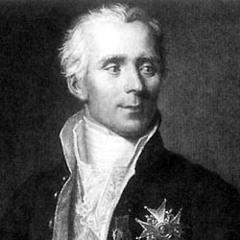
Pierre-Simon Laplace

Pierre-Simon Laplace was a renowned French mathematician and astronomer born on March 23, 1749, and died on March 5, 1827. He is considered one of the founders of probability theory and celestial mechanics. Laplace's work in mathematics, astronomy, and probability has had a profound impact on the development of modern science. more

You May Also Like

“This incomparable Author having at length been prevailed upon to appear in public, has in this Treatise given a most notable instance of the extent of the powers of the Mind; and has at once shown what are the Principles of Natural Philosophy, and so far derived from them their consequences, that he seems to have exhausted his Argument, and left little to be done by those that shall succeed him.a”

“Until now, physical theories have been regarded as merely models with approximately describe the reality of nature. As the models improve, so the fit between theory and reality gets closer. Some physicists are now claiming that supergravity is the reality, that the model and the real world are in mathematically perfect accord.”

“Who ... is not familiar with Maxwell's memoirs on his dynamical theory of gases? ... from one side enter the equations of state; from the other side, the equations of motion in a central field. Ever higher soars the chaos of formulae. Suddenly we hear, as from kettle drums, the four beats 'put n=5.' The evil spirit v vanishes; and ... that which had seemed insuperable has been overcome as if by a stroke of magic ... One result after another follows in quick succession till at last ... we arrive at the conditions for thermal equilibrium together with expressions for the transport coefficients.”

“Wallace's sales agent, back in London, heard mutterings from some naturalists that young Mr. Wallace ought to quit theorizing and stick to gathering facts. Besides expressing their condescension toward him in particular, that criticism also reflected a common attitude that fact-gathering, not theory, was the proper business of all naturalists.”

“[The infinitely small] neither have nor can have theory; it is a dangerous instrument in the hands of beginners [ ... ] anticipating, for my part, the judgement of posterity, I would dare predict that this method will be accused one day, and rightly, of having retarded the progress of the mathematical sciences.”

“[Theory is] an explanation that has been confirmed to such a degree, by observation and experiment, that knowledgeable experts accept it as fact. That's what scientists mean when they talk about a theory: not a dreamy and unreliable speculation, but an explanatory statement that fits the evidence. They embrace such an explanation confidently but provisionally - taking it as their best available view of reality, at least unil some severely conflicting data or some better explanation might come along.”