Quotessence
Home / Quotes / Quote by Hippocrates

Quote by Hippocrates

Author

Hippocrates
Hippocrates

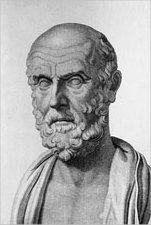
Hippocrates, a renowned Greek physician, is known as the 'Father of Medicine'. Born in 460 BC and died in 370 BC, he proposed the 'humoral theory' and emphasized the importance of the 'Hippocratic Oath' for doctors. His medical theories and practices have had a profound impact on the world. more

You May Also Like

“Science has a simple faith, which transcends utility. Nearly all men of science, all men of learning for that matter, and men of simple ways too, have it in some form and in some degree. It is the faith that it is the privilege of man to learn to understand, and that this is his mission. If we abandon that mission under stress we shall abandon it forever, for stress will not cease. Knowledge for the sake of understanding, not merely to prevail, that is the essence of our being. None can define its limits, or set its ultimate boundaries.”

“Science itself is badly in need of integration and unification. The tendency is more and more the other way ... Only the graduate student, poor beast of burden that he is, can be expected to know a little of each. As the number of physicists increases, each specialty becomes more self-sustaining and self-contained. Such Balkanization carries physics, and indeed, every science further away, from natural philosophy, which, intellectually, is the meaning and goal of science.”

“Sciences usually advances by a succession of small steps, through a fog in which even the most keen-sighted explorer can seldom see more than a few paces ahead. Occasionally the fog lifts, an eminence is gained, and a wider stretch of territory can be surveyed-sometimes with startling results. A whole science may then seem to undergo a kaleidoscopic rearrangement, fragments of knowledge sometimes being found to fit together in a hitherto unsuspected manner. Sometimes the shock of readjustment may spread to other sciences; sometimes it may divert the whole current of human thought.”

“Scientia potentia est, sed parva; quia scientia egregia rara est, nec proinde apparens nisi paucissimis, et in paucis rebus. Scientiae enim ea natura est, ut esse intelligi non possit, nisi ab illis qui sunt scientia praediti.”