Quotessence
Home / Quotes / Quote by Bret Easton Ellis

Quote by Bret Easton Ellis

“..and she follows you to the light at the door and says..."Hello"... and never has a second hurt and ruptured, blistered so harshly because the music's too loud and you can't hear, don't even notice, and you take her hand instead and you are both leaving.”

Quote by Bret Easton Ellis

Work

The Rules of Attraction

This book delves into the complex dynamics and personal struggles of a group of friends as they navigate the challenges of love, ambition, and the pursuit of happiness in the bustling cityscape of New York. more

Author
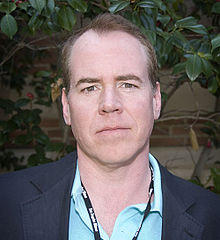
Bret Easton Ellis
Bret Easton Ellis

American novelist known for his profound insights into modern urban life and sharp criticism. His works, including 'Less Than Zero' and 'The Rules of Attraction', are renowned for their unique narrative style and sharp social observations. more

You May Also Like

“Women may come to the recovery process to "fix" their relationships, but what they end up learning is how to rescue and restore themselves. Many women believe, and you may too, that they need to speak and act differently so their partner behaves more favorably toward them. If your partner blames you for what "you made him do to you," over time you will end up blaming yourself. Your task is to realize that you are not responsible for his abusive behavior. Women tend to work hard to avoid being hurt or to seop their partners from abusing them, but they aren't successful. You cannot make your partner abuse you and you can't make him not abuse you. These are his choices and his alone. The task is to refocus on yourself and your recovery.”

“The racial template which got placed over ethnic conflict in Detroit and other industrial cities of the North would obscure the real dynamics of the struggle, which was ethnic and religious rather than racial. Black in-migrants, as a result, were thrown into direct competition, not with the WASP elite which was orchestrating events, but rather the ethnics — specifically the Poles and to a lesser extent, the Italians — who lived in the neighborhoods immediately adjacent to the black ghettoes that were now filled to the bursting point with people hoping to benefit from the new employment opportunities the war economy provided. This led to some tragic misunderstandings, as blacks possessing their own nativist prejudices started accusing Poles of racism. The Poles who had been born in Europe were generally oblivious to racial concerns. Their children, the Poles who had been born in America, thought that the adoption of racial attitudes was part of the Americanization process. Poles in general wanted to know why they were being singled out as responsible for a situation which antedated their arrival in this country by hundreds of years, and blacks, facing Poles in direct competition for jobs and housing, wanted to know why “too many blacks had been fired to make jobs for other racial groups, some of whom can hardly speak our language and owe no allegiance to our flag.”