Quotessence
Home / Quotes / Quote by D.T. Suzuki

Quote by D.T. Suzuki

“Zen is forced to resort to negation because of our innate ignorance (avidya), which tenaciously clings to the mind as wet clothes do to the body. 'Ignorance' is all very well as far as it goes, but it must not go out of its proper sphere. 'Ignorance' is another name for logical dualism. White is snow and black is the raven. But these belong to the world and its ignorant way of talking. If we want to get to the very truth of things, we must see them from the point where this world has not yet been created, where the consciousness of this and that has not yet been awakened and where the mind is absorbed in its own identity, that is, in its serenity and emptiness. This is a world of negations but leading to a higher and absolute affirmation--an affirmation in the midst of negations. Snow is not white, the raven is not black, yet each in itself is white or black. This is where our everyday language fails to convey the exact meaning as conceived by Zen.”

Quote by D.T. Suzuki

Work

An Introduction to Zen Buddhism

An Introduction to Zen Buddhism provides a comprehensive look at the history, teachings, and practices of Zen Buddhism. The text delves into the core concepts and techniques that define this path of enlightenment, including meditation, mindfulness, and the concept of Zen enlightenment. It is suitable for both beginners and those with some prior knowledge of Zen, aiming to offer a clear and accessible introduction to this rich and complex tradition. more

Author
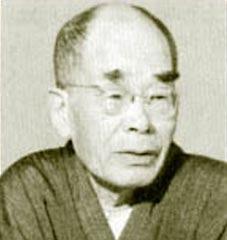
D.T. Suzuki
D.T. Suzuki

D.T. Suzuki, a renowned Japanese philosopher, Buddhist scholar, and translator, was born on October 18, 1870, and died on July 12, 1966. He is best known for his profound research into Zen Buddhism and his influential translations, which have greatly contributed to the Western understanding of Eastern philosophy and culture. more

You May Also Like

“[W]hen I leave the Church and the city behind and go out under the sky, when I am with the birds, [...] with the clouds, [...] and with the oceans, [...] I cannot feel Christianity because I am in a world which grows from within. I am simply incapable of feeling its life as coming from above[.] More exactly, I cannot feel that its life comes from Another, from one who is qualitatively and spiritually external to all that lives and grows. On the contrary, I feel this whole world to be moved from the inside, and from an inside so deep that it is my inside as well, more truly I than my surface consciousness.”

“According to Zen legend, when a visitor asked the fifteenth-century master Ikkyu to write down a maxim of “the highest wisdom,” Ikkyu wrote one word: “Attention.” The visitor asked, irritably, “Is that all?” This time, Ikkyu wrote two words: “Attention. Attention.”

“Suppose I feel I have no friends, and I’m very lonely. What happens if I sit with that? I begin to see that my feelings of loneliness are really just thoughts. As a matter of fact, I’m simply sitting here. Maybe I’m sitting alone in my room, without a date. Nobody has called me, and I feel lonely. In fact, however, I’m simply sitting. The loneliness and the misery are simply my thoughts, my judgments that things should be other than what they are. I haven’t seen through them; I haven’t recognized that my misery is manufactured by me. The truth of the matter is, I’m simply sitting in my room. It takes time before we can see that just to sit there is okay, just fine. I cling to the thought that if I don’t have pleasant and supportive company, I am miserable.”

“Zazen is actually not complicated. The real problem is, we don’ t want to do it. If my boyfriend begins to look at other women, how long am I going to be willing simply to experience that? We all have problems constantly, but our willingness just to be is very low on our list of priorities, until we have practiced long enough to have faith in just being, so that solutions can appear naturally. Another mark of a maturing practice is the development of such trust and faith.”