Quotessence
Home / Quotes / Quote by Virginia Woolf

Quote by Virginia Woolf

Work

Orlando

Orlando is a novel by Virginia Woolf that tells the story of a young nobleman who, after a mysterious transformation, lives as a woman for several centuries. The narrative spans from the Elizabethan era to the early 20th century, blending biography, fantasy, and satire. The book examines the fluidity of gender, the nature of artistic creation, and the passage of time, all while maintaining a playful and lyrical tone. It is considered a key work in modernist literature and a pioneering exploration of gender identity. more
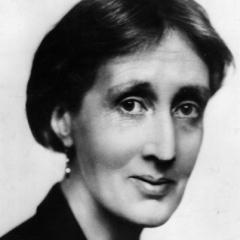
Author

Virginia Woolf
Virginia Woolf

British modernist writer, known for her unique narrative techniques and profound portrayal of female experience. Her works include 'To the Lighthouse' and 'Mrs. Dalloway'. more

You May Also Like

“Here she tossed her foot impatiently, and showed an inch or two of calf. A sailor on the mast, who happened to look down at the moment, started so violently that he missed his footing and only saved himself by the skin of his teeth. 'If the sight of my ankles means death to an honest fellow who, no doubt, has a wife and family to support, I must, in all humanity, keep them covered,' Orlando thought. Yet her legs were among her chieftest beauties. And she fell to thinking what an odd pass we have come to when all a woman's beauty has to be kept covered lest a sailor fall from a mast-head. 'A pox on them!' she said, realizing for the first time what, in other circumstances, she would have been taught as a child, that is to say, the sacred responsibilities of womanhood...”

“These selves of which we are built up, one on top of another, as plates are piled on a waiter's hand, have attachments elsewhere, sympathies, little constitutions and rights of their own, call them what you will (and for many of these things there is no name) so that one will only come if it is raining, another in a room with green curtains, another when Mrs Jones is not there, another if you can promis it a glass of wine —and so on; for verybody can multiply from his own experience the different terms which his different selves have made with him—and some are too wildly ridiculous to be mentioned in print at all.”

“At length the colour on her cheeks resumed its stability and it seemed as if the spirit of the age—if such indeed it were—lay dormant for a time. Then Orlando felt in the bosom of her shirt as if for some locket or relic of lost affection, and drew out no such thing, but a roll of paper, sea-stained, blood-stained, travel-stained—the manuscript of her poem, 'The Oak Tree'. She had carried this about with her for so many years now, and in such hazardous circumstances, that many of the pages were stained, some were torn, while the straits she had been in for writing paper when with the gipsies, had forced her to overscore the margins and cross the lines till the manuscript looked like a piece of darning most conscientiously carried out. She turned back to the first page and read the date, 1586, written in her own boyish hand. She had been working at it for close three hundred years now. It was time to make an end. Meanwhile she began turning and dipping and reading and skipping and thinking as she read, how very little she had changed all these years. She had been a gloomy boy, in love with death, as boys are; and then she had been amorous and florid; and then she had been sprightly and satirical; and sometimes she had tried prose and sometimes she had tried drama. Yet through all these changes she had remained, she reflected, fundamentally the same.”

“The sound of the trumpets died away and Orlando stood stark naked. No human being since the world began, has ever looked more ravishing. His form combined in one the strength of a man and a woman’s grace. As he stood there, silver trumpets prolonged their note, as if reluctant to leave the lovely sight which their blast had called forth; and Chastity, Purity, and Modesty, inspired, no doubt, by Curiosity, peeped in at the door and threw a garment like a towel at the naked form which, unfortunately, fell short by several inches. Orlando looked at himself up and down in a long looking-glass, without showing any signs of discompose, and went presumably, to his bath. We many take advantage of this pause in the narrative to make certain statements. Orlando had become a woman - there is no denying it. But in every other respect, Orlando remained precisely as he had been. The change in sex, though it altered their future, did nothing whatever to alter their identity. Their faces remained, as their portraits prove, practically the same. His memory - but in the future we must, for convention’s sake, say ‘her’ for ‘his’, and ‘she’ for ‘he’ - her memory then, went back through all the events of her past life without encountering any obstacle. Some slight haziness there may have been, as if a few dark spots had fallen into the clear pool of memory; certain things had become a little dimmed; but that was all. The change seemed to have been accomplished painlessly and completely and in such a way that Orlando herself showed no surprise at it. Many people, taking this into account, and holding that such a change in sex is against nature, have been at great pains to prove (1) that Orlando has always been a woman, (2) that Orlando is at this moment a man. Let biologists and psychologists determine. It is enough for us to state the simple fact; Orlando was a man till the age of thirty; when he became a woman and has remained so ever since.”

“The taste for books was an early one. As a child he was sometimes found at midnight by a page still reading. They took his taper away, and he bred glow-worms to serve his purpose. They took the glow-worms away, and he almost burnt the house down with a tinder. To put it in a nutshell, leaving the novelist to smooth out the crumpled silk and all its implications, he was a nobleman afflicted with a love of literature. Many people of his time, still more of his rank, escaped the infection and were thus free to run or ride or make love at their own sweet will. But some were early infected by a germ said to be bred of the pollen of the asphodel and to be blown out of Greece and Italy, which was of so deadly a nature that it would shake the hand as it was raised to strike, and cloud the eye as it sought its prey, and make the tongue stammer as it declared its love. It was the fatal nature of this disease to substitute a phantom for reality, so that Orlando, to whom fortune had given every gift--plate, linen, houses, men-servants, carpets, beds in profusion--had only to open a book for the whole vast accumulation to turn to mist. The nine acres of stone which were his house vanished; one hundred and fifty indoor servants disappeared; his eighty riding horses became invisible; it would take too long to count the carpets, sofas, trappings, china, plate, cruets, chafing dishes and other movables often of beaten gold, which evaporated like so much sea mist under the miasma. So it was, and Orlando would sit by himself, reading, a naked man.”

“She remembered how, as a young man, she had insisted that women must be obedient, chaste, scented, and exquisitely apparelled. "Now I shall have to pay in my own person for those desires," she reflected; "for women are not (judging by my own short experience of the sex) obedient, chaste, scented, and exquisitely apparelled by nature. They can only attain these graces, without which they may enjoy none of the delights of life, by the most tedious discipline. There's the hairdressing," she thought, "that alone will take an hour of my morning, there's looking in the looking-glass, another hour; there's staying and lacing; there's washing and powdering; there's changing from silk to lace and from lace to paduasoy; there's being chaste year in and year out...”

“What made the process still longer was that it was profusely illustrated, not only with pictures, as that of old Queen Elizabeth, laid on her tapestry couch in rose-coloured brocade with an ivory snuff-box in her hand and a gold-hilted sword by her side, but with scents — she was strongly perfumed — and with sounds; the stags were barking in Richmond Park that winter’s day. And so, the thought of love would be all ambered over with snow and winter; with log fires burning; with Russian women, gold swords, and the bark of stags; with old King James’ slobbering and fireworks and sacks of treasure in the holds of Elizabethan sailing ships. Every single thing, once he tried to dislodge it from its place in his mind, he found thus cumbered with other matter like the lump of glass which, after a year at the bottom of the sea, is grown about with bones and dragon-flies, and coins and the tresses of drowned women.”