Quotessence
Home / Quotes / Quote by Dani Shapiro

Quote by Dani Shapiro

Work

Inheritance: A Memoir of Genealogy, Paternity, and Love

Browse quotes and source details for this work. more

Author
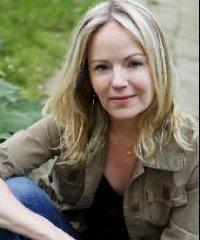
Dani Shapiro
Dani Shapiro

Dani Shapiro is an acclaimed American author born on April 10, 1962. She is known for her works in the genres of fiction, essays, and memoirs, which are characterized by their profound emotional depth and delicate prose. more

You May Also Like

“In this stillness that is at the same time movement, in this darkness that is at the same time light, change is found not in the realm of ideas but in the energizing desire that is realized through precipitation. Desire tends towards its own realization and change takes place when the desire for it shatters the bounds of the possible, breaking the dialectical equilibrium holding together the framework of what is existent. It is at such moments that the imaginary flows into the real and overwhelms it, inundating it until it has been absorbed.”

“The funny thing about games and fictions is that they have a weird way of bleeding into reality. Whatever else it is, the world that humans experience is animated with narratives, rituals, and roles that organize psychological experience, social relations, and our imaginative grasp of the material cosmos. The world, then, is in many ways a webwork of fictions, or, better yet, of stories. The contemporary urge to “gamify” our social and technological interactions is, in this sense, simply an extension of the existing games of subculture, of folklore, even of belief. This is the secret truth of the history of religions: not that religions are “nothing more” than fictions, crafted out of sociobiological need or wielded by evil priests to control ignorant populations, but that human reality possesses an inherently fictional or fantastic dimension whose “game engine” can — and will — be organized along variously visionary, banal, and sinister lines. Part of our obsession with counterfactual genres like sci-fi or fantasy is not that they offer escape from reality — most of these genres are glum or dystopian a lot of the time anyway — but because, in reflecting the “as if” character of the world, they are actually realer than they appear.”

“Beyond any human lifetime, and often even within it, what is recorded is what is remembered, the records gradually displacing the actuality of lived events. And what is recorded is a fraction of what is thought, felt, acted out, lived—a fraction at best edited by the very act of its selection, at worst warped by rationalization or fictionalized by a deliberate retelling of reality. The stories we tell about our own lives, to others but especially to ourselves, we tell in order to make our lives livable.”

“Ecology is beginning to slowly shift focus with tentative explorations of what the world would look like if process, rather than matter were the basis for reality What if we defined a species in terms of its life processes? We might seriously doubt whether the California condor or the tall grass prairie can be 'saved' or even 'restored.' Perhaps we can re-create some local conditions that foster a few nests of condors or a few acres of prairie. But the life process of the condor ended with the urbanization of the California foothills and the living ebb and flow of the tall grass prairies died with the plowing of the Great Plains. What if we suggested that a thing is what it does? In this light, the Rocky Mountain locust was a immense aperiodic energy flow that linked life processes on a continental scale. This notion of life-as-process might seem unusual in a society in which material existence is primary. But such a perception informs our deepest understanding of life. Indeed, life-as-process underlies our notion of euthanasia. When loved ones are simply bodies, devoid of the capacity to care, respond, or relate again a away that we can recognize as being "them," we understand that they are gone even before they are dead.”