Quotessence
Home / Quotes / Quote by Ludwig Feuerbach

Quote by Ludwig Feuerbach

Work

Essence of Christianity

Browse quotes and source details for this work. more

Author
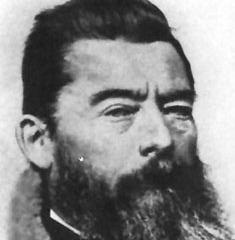
Ludwig Feuerbach
Ludwig Feuerbach

Ludwig Feuerbach, a prominent German philosopher born on July 28, 1804, and died on September 13, 1872. He was a significant figure in the German classical philosophy and had a profound impact on the birth of Marxist philosophy. more

You May Also Like

“The food is ready,” Zil announced to loud cheers. “But we have something more important to do, first, before we can eat.” Groans. “We have to carry out some justice.” That earned a silent stare until Turk and Hank started raising their hands and yelling, showing the crowd how to act. “This mutant, this nonhuman scum here, this freak Hunter…” Zil pointed, arm stretched out, at his captive. “This chud deliberately murdered my best friend, Harry.” “Na troo,” Hunter said. His mouth still didn’t work right. Brain damage, Zil supposed, from the little knock on his head. Half of Hunter’s face drooped like it wasn’t quite attached right. It made it easier for the crowd of kids to sneer at him, and Hunter, yelling in his drooling retard voice, wasn’t helping his case. “He’s a killer!” Zil cried suddenly, smacking his fist into his palm. “A freak! A mutant!” he cried. “And we know what they’re like, right? They always have enough food. They run everything. They’re in charge and we’re all starving. Is that some kind of coincidence? No way.” “Na troo,” Hunter moaned again. “Take him!” Zil cried to Antoine and Hank. “Take him, the murdering mutant scum!” They seized Hunter by the arms. He could walk, but only by dragging one leg. They half carried, half marched him across the plaza. They dragged him up the church steps. “Now,” Zil said, “here is how we’re going to do this.” He waved his hand toward the rope that Lance was unspooling back through the plaza. An expectant pause. A dangerous, giddy feeling. The smell of the meat had them all crazy. Zil could feel it. “You all want some of this delicious venison?” They roared their assent. “Then you’ll all grab on to the rope.”

“First off,” he said, “I want to say I’m sorry about E.Z. He was a good kid. He didn’t deserve…” For a moment he almost lost it as a surge of emotion welled up from nowhere. “I’m sorry he died.” Someone sobbed loudly. “Look, I’m going to get right to it: we have three hundred and thirty-two…I’m sorry, three hundred and thirty-one mouths to feed,” Sam said. He placed his hands on his hips and planted his feet wide apart. “We were already pretty bad off for food supplies. But after the attack by the Coates kids…well, it’s not pretty bad off, anymore, it’s desperate.” He let that sink in. But how much were six-and eight-year-olds really grasping? Even the older kids looked more glazed than alarmed. “Three hundred and thirty-one kids,” Sam reiterated, “And food for maybe a week. That’s not a long time. It’s not a lot of food. And as you all know, the food we have is awful.” That got a response from the audience. The younger kids produced a chorus of gagging and retching sounds. “All right,” Sam snapped. “Knock it off. The point is, things are really desperate.”

“I’m trying to help,” Albert said. “By paying him with beer?” “I paid him what he wanted, and Sam was okay with it. You were at the meeting,” Albert said. “Look, how else do you think you get someone like Orc to spend hours in the hot sun working? Astrid seems to think people will work just because we ask them to. Maybe some will. But Orc?” Lana could see his point. “Okay. I shouldn’t have jumped all over you.” “It’s okay. I’m getting used to it,” Albert said. “Suddenly I’m the bad guy. But you know what? I didn’t make people the way they are. If kids are going to work, they’re going to want something back.” “If they don’t work, we all starve.” “Yeah. I get that,” Albert said with more than a tinge of sarcasm. “Only, here’s the thing: Kids know we won’t let them starve as long as there’s any food left, right? So they figure, hey, let someone else do the work. Let someone else pick cabbages and artichokes.” Lana wanted to get back to her run. She needed to finish, to run to the FAYZ wall. But there was something fascinating about Albert. “Okay. So how do you get people to work?” He shrugged. “Pay them.” “You mean, money?” “Yeah. Except guess who had most of the money in their wallets and purses when they disappeared? Then a few kids stole what was left in cash registers and all. So if we start back using the old money we just make a few thieves powerful. It’s kind of a problem.” “Why is a kid going to work for money if they know we’ll share the food, anyway?” Lana asked. “Because some will do different stuff for money. I mean, look, some kids have no skills, right? So they pick the food for money. Then they take the money and spend it with some kid who can maybe cook the food for them, right? And that kid maybe needs a pair of sneakers and some other kid has rounded up all the sneakers and he has a store.” Lana realized her mouth was open. She laughed. The first time in a while. “Fine. Laugh,” Albert said, and turned away. “No, no, no,” Lana hastened to say. “No, I wasn’t making fun of you. It’s just that, I mean, you’re the only kid that has any kind of a plan for anything.”

“I’m trying to make a profit. I’m using batteries, toilet paper, and paper towels as currency. Each is something that will eventually be in short supply.” “You’re trying to get all the toilet paper in town?” Astrid shrilled. “Are you kidding?” “No, Astrid, I’m not kidding,” Albert said. “Look, right now, kids are playing with the stuff. I saw little kids throwing rolls of it around on their lawns like it was a toy. So—” “So your solution is to try and take it all away from people?” “You’d rather see it wasted?” “Yeah, actually,” Astrid huffed. “Rather than you getting it all for yourself. You’re acting like a jerk.” Albert’s eyes flared. “Look, Astrid, now kids know they can buy their way into the club with it. So they’re not going to waste it anymore.” “No, they’re going to give it all to you,” she shot back. “And what happens when they need some?” “Then there will still be some left because I made it valuable.” “Valuable to you.” “Valuable to everyone, Astrid.” “It’s you taking advantage of kids dumb enough not to know any better. Sam, you have to put a stop to this.” Sam had drifted away from the conversation, his head full of the music. He snapped back. “She’s right, Albert, this isn’t okay. You didn’t get permission—” “I didn’t think I needed permission to give kids what they want. I mean, I’m not threatening anyone, saying, ‘Give me your toilet paper, give me your batteries.’ I’m just playing some music and saying, ‘If you want to come in and dance, then it’ll cost you.’” “Dude, I respect you being ambitious and all,” Sam said. “But I have to shut this down. You never got permission, even, let alone asked us if it was okay to charge people.” Albert said, “Sam, I respect you more than I can even say. And Astrid, you are way smarter than me. But I don’t see how you have the right to shut me down.” That was it for Sam. “Okay, I tried to be nice. But I am the mayor. I was elected, as you probably remember, since I think you voted for me.” “I did. I’d do it again, man. But Sam, Astrid, you guys are wrong here. This club is about all these kids have that can get them together for a good time. They’re sitting in their homes starving and feeling sad and scared. When they’re dancing, they forget how hungry and sad they are. This is a good thing I’m doing.” Sam stared hard at Albert, a stare that kids in Perdido Beach took seriously. But Albert did not back down. “Sam, how many cantaloupes did Edilio manage to bring back with kids who were rounded up and forced to work?” Albert asked. “Not many,” Sam admitted. “Orc picked a whole truckload of cabbage. Before the zekes figured out how to get at him. Because we paid Orc to work.” “He did it because he’s the world’s youngest alcoholic and you paid him with beer,” Astrid snapped. “I know what you want, Albert. You want to get everything for yourself and be this big, important guy. But you know what? This is a whole new world. We have a chance to make it a better world. It doesn’t have to be about some people getting over on everyone else. It can be fair to everyone.” Albert laughed. “Everyone can be equally hungry. In a week or so, everyone can starve.”

“Albert had created a currency based on gold bullets and McDonald’s game pieces. He’d wanted to call the currency something else, but no one remembered what. So, ’Bertos they were, a play on “Albert,” coined by Howard, of course, who had also come up with “the FAYZ” to describe their weird little world. Sam had thought Albert was nuts with his obsession with creating money. But the evidence was in: Albert’s system was producing just enough food for kids to survive. And a lot more kids were working. Far fewer were just hanging out. It was no longer impossible to get kids to go into the fields and do the backbreaking work of picking crops. They worked for ’Bertos and spent ’Bertos, and for now at least starvation was just a bad memory.”