“What’s especially irritating in grammars (have you noticed how exquisitely impossible it is for us to be talking about this?) – the most irritating part of grammars is the chapter on verbs, since these are what give meaning to sentences… An honest sentence should always have any number of possible meanings… Verbs!… A friend of mine who committed suicide – every time I have a longish conversation I suicide a friend – was going to dedicate his life to destroying verbs… - Why did he commit suicide? – Wait, I still don’t know… He wanted to discover and develop a method for surreptitiously not completing sentences. He used to say that he was searching for the microbe of meaning… He committed suicide – yes, of course – because one day he realized what a tremendous responsibility he’d assumed… The enormity of the problem made him go nuts…”
Quote by Fernando Pessoa
Work
The Book of Disquiet: The Complete Edition
The Book of Disquiet is a seminal work by Portuguese poet and writer Fernando Pessoa, featuring a series of personal and philosophical essays, letters, and poems. It is considered a cornerstone of modernist literature, offering a deep and introspective look into the author's thoughts and experiences. more
Author
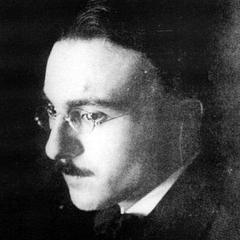
Fernando Pessoa
Portuguese poet known for his unique narrative style and rich inner world. Fernando Pessoa is considered one of the most influential writers of the 20th century, and his works are still widely studied and discussed today. more
You May Also Like
Source: Compass Rose
Source: Slaying Dragons: Quotes, Poetry, & a Few Short Stories for Every Day of the Year
“Freedom is viewed as a ‘right’ to those who don’t yet understand that everything is a ‘privilege.”
“Our greatest debts are often the ones that we don’t see as either ‘great’ or ‘debt’.”
Source: Walking on Water: Reflections on Faith and Art