Quotessence
Home / Quotes / Quote by Immanuel Wallerstein

Quote by Immanuel Wallerstein

“For the other end of the spectrum, the 50 to 85 percent of the world's population who are not the recipients of privilege, the world they know is almost certainly worse than any their earlier counterparts knew. It is likely they are worse off materially, despite the technological changes. In substantive as opposed to formal terms, they are more, not less, subject to arbitrary constraints, since the central mechanisms are more pervasive and more efficient. And they bear the brunt of the various kinds of psychic malaise, as well as of the destructiveness of civil wars.”

Quote by Immanuel Wallerstein

Author
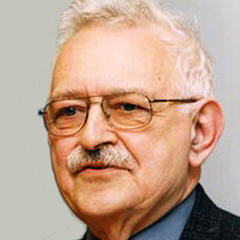
Immanuel Wallerstein

Immanuel Wallerstein is a renowned American sociologist known for his contributions to world-systems theory. His research focuses on globalization and international relations, profoundly influencing the understanding of the modern world order. more

You May Also Like

“If we return to the two faces of individualism - individualism as the spur of energy, initiative, and imagination; and individualism as the limitless struggle of all against all - it can be seen how the two practices emerge from and limit the extend of the disequilibrating impact of the contradiction involved in the geocultural agenda.”

“The way in which these two practices contain each other is that it has always been possible to use the one against the other: to use racism-sexism to prevent universalism from moving too far in the direction of egalitarianism; to use universalism to prevent racism-sexism from moving too far in the direction of a caste system that would inhibit the work force mobility so necessary for the capitalist accumulation process.”

“We seem to be in the midst of a process of cascading bifurcations that may last some 50 more years. We can be sure some new historical order will emerge. We cannot be sure what that order will be. Concretely, we may symbolize the first bifurcation as the effect of the world revolution of 1968 which continued up to and including the so-called collapse of the communisms in 1989, the social bifurcation.”

“One by one, these governments came undone, and were forced into IMF tutelage (and national illegitimacy) by the careening oil prices, the debt imbroglio, and falling terms of trade. The last of these governments to fall were the Communist regimes of eastern Europe, which have now gone the way of other Third World countries. The second in the cascade of bifurcations is thus symbolized by 1989.”

“Are there still other possibilities? Of course there are. What is important to recognize is that all three historical options are really there, and the choice will depend on our collective world behavior over the next fifty years. Whichever option is chosen, it will not be the end of history, but in a real sense its beginning. The human social world is still very young in cosmological time. In 2050 or 2100, when we look back at capitalist civilization, what will we think?”