Quotessence
Home / Quotes / Quote by David Hume

Quote by David Hume

“We find in the course of nature that though the effects be many, the principles from which they arise are commonly few and simple, and that it is the sign of an unskilled naturalist to have recourse to a different quality in order to explain every different operation.”

Quote by David Hume

Author
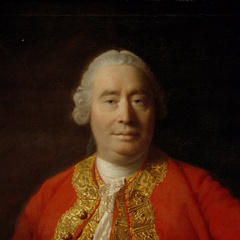
David Hume
David Hume

David Hume, born on May 7, 1711, in Edinburgh, Scotland, and died on August 25, 1776, was an outstanding philosopher, historian, and economist. Known for his contributions to empiricism and skepticism, his works have had a profound impact on subsequent philosophy, economics, and psychology. more

You May Also Like

“..all arguments concerning existence are founded on the relation of cause and effect; that our knowledge of that relation is derived entirely from experience; and all our experimental conclusions proceed upon the supposition that the future will be conformable to the past. .... Without the influence of custom, we should be entirely ignorant of every matter of fact beyond what is immediately present to the memory and senses.”

“And as this is the obvious appearance of things, it must be admitted, till some hypothesis be discovered, which by penetrating deeper into human nature, may prove the former affections to be nothing but modifications of the latter. All attempts of this kind have hitherto proved fruitless, and seem to have proceeded entirely from that love of simplicity which has been the source of much false reasoning in philosophy.”

“The difference between a man who is led by opinion or emotion and one who is led by reason. The former, whether he will or not, performs things of which he is entirely ignorant; the latter is subordinate to no one, and only does those things which he knows to be of primary importance in his life, and which on that account he desires the most; and therefore I call the former a slave, but the latter free.”

“Here I shall add that the concept of change, and with it the concept of motion, as change of place, is possible only through and in the representation of time. & Motion, for example, presupposes the perception of something movable. But space considered in itself contains nothing movable; consequently motion must be something which is found in space only through experience -in other words, is an empirical datum.”